Rampart Farmstead · Southwest Florida
Sunshine Mimosa
A native Florida groundcover with ferny leaves and pink powder-puff flowers — a beautiful, drought-tolerant alternative to turf and a quiet workhorse for the southwest Florida garden.
The Plant
A Native Groundcover Worth Knowing
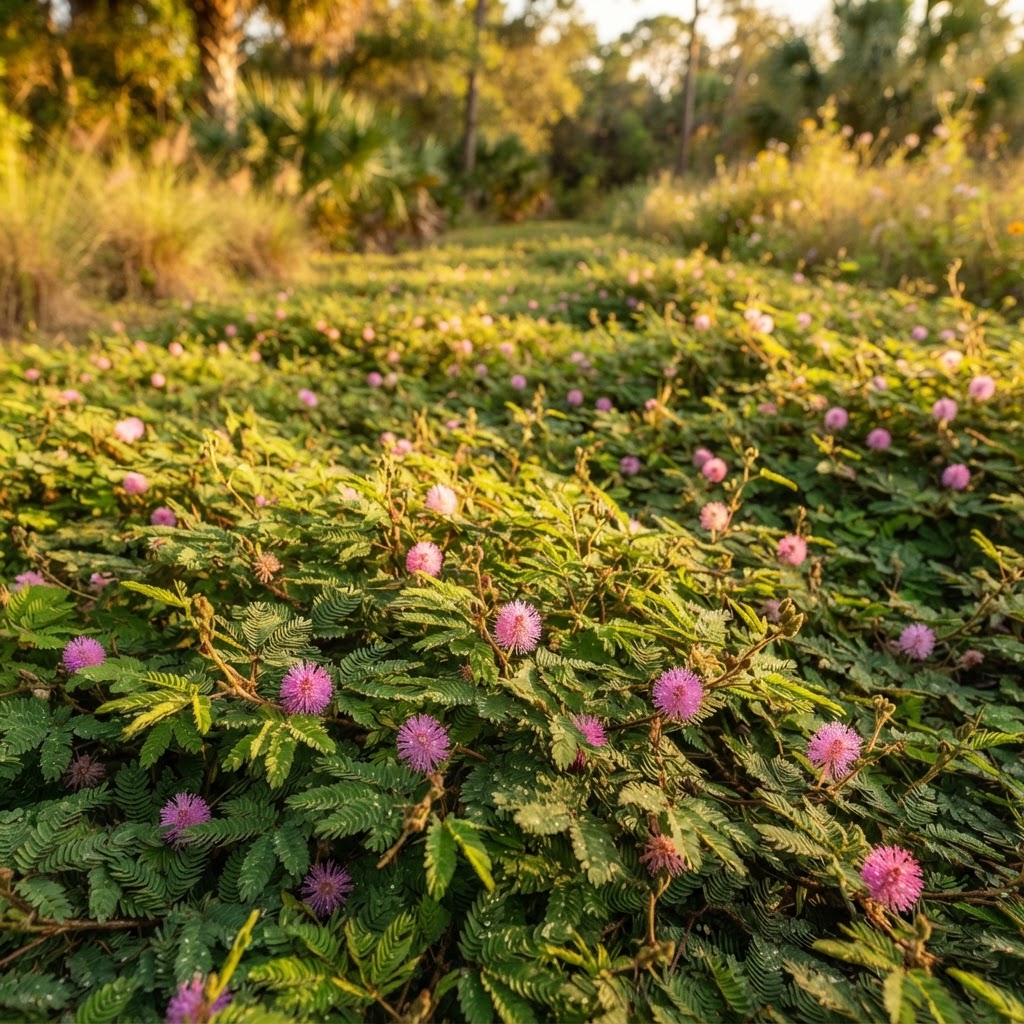
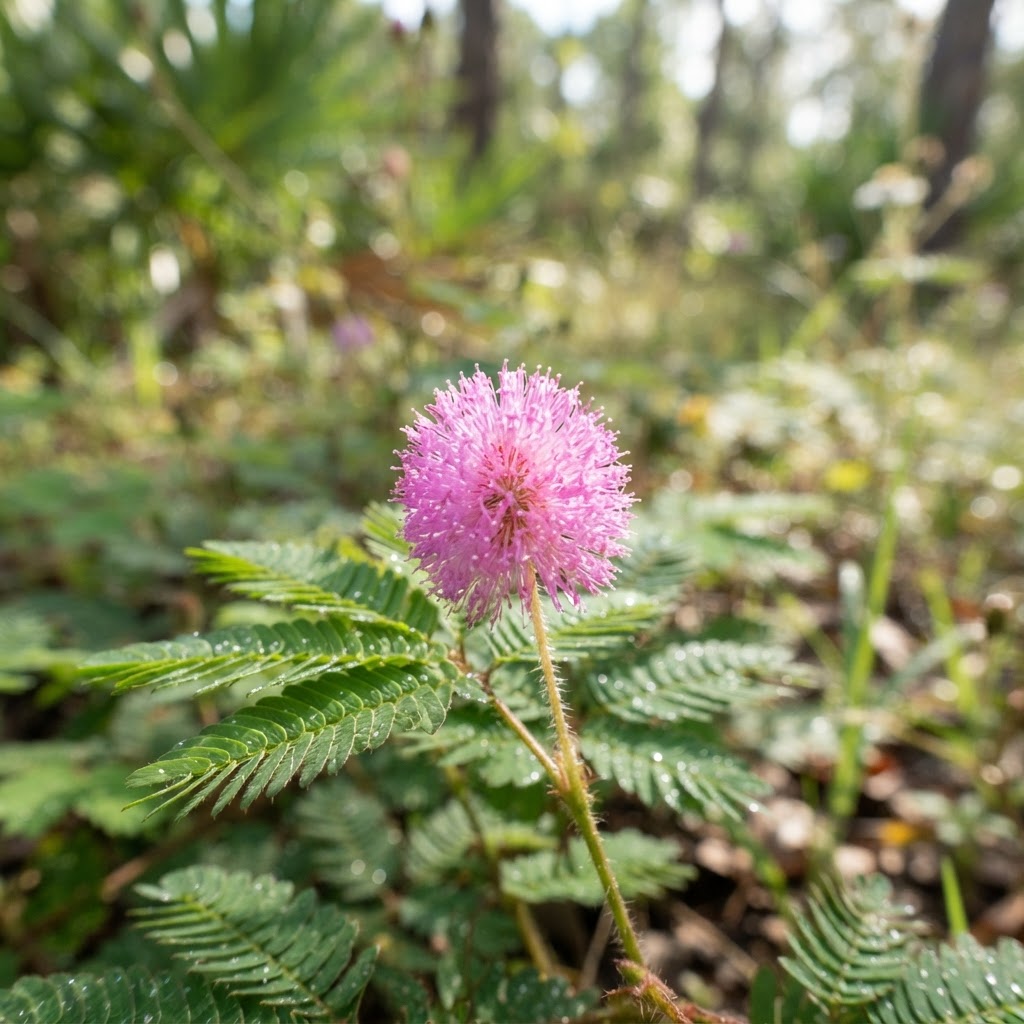
Sunshine mimosa (Mimosa strigillosa), also called powderpuff mimosa or sensitive plant, is a low-growing native wildflower found across Florida and the Gulf Coast. Its finely divided, fern-like leaves fold up when touched or in rain — a charming habit that delights children and gardeners alike — and from spring through fall it covers itself in small, bright pink powder-puff blooms.
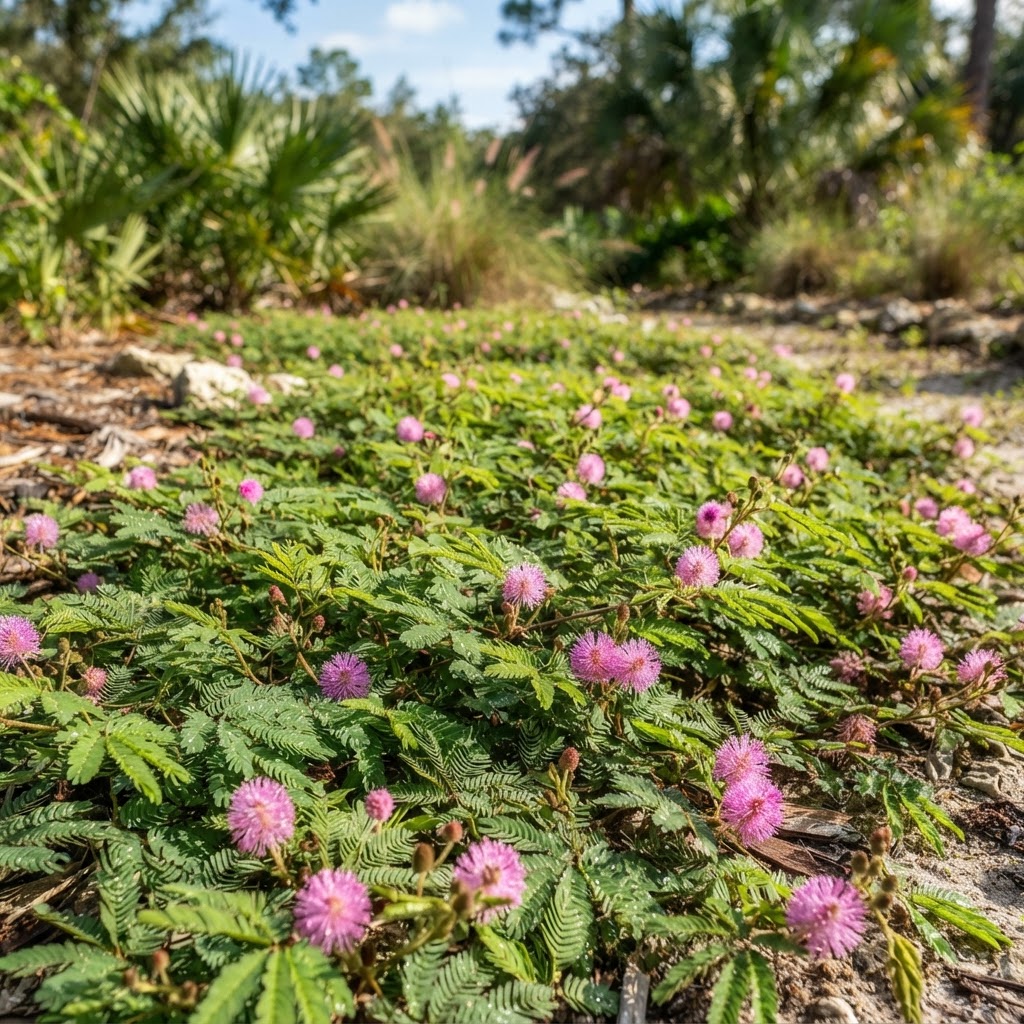
What makes it special is how much it does with so little. It spreads into a soft, walkable mat a few inches tall, needs no fertilizer, survives long dry spells, and feeds pollinators for months. Where a lawn demands water, mowing, and chemicals, sunshine mimosa simply grows.
It is one of the most rewarding plants a southwest Florida gardener can put in the ground — beautiful, useful, and genuinely good for the land.
The Flower
As a Groundcover
Why It Matters
A Plant That Gives Back
Sunshine mimosa is a legume, which means it fixes its own nitrogen from the air and needs no fertilizer — and even builds the soil it grows in. Its dense mat shades out weeds, holds moisture, and prevents erosion on sandy Florida slopes and banks.
Its long bloom season feeds bees, butterflies, and other pollinators from spring through fall, making it a valuable nectar plant in the native landscape. And because it needs no mowing, no irrigation, and no chemicals, it replaces high-maintenance turf with something genuinely sustainable.
In a region where lawns guzzle water and fertilizer runs off into the Gulf, every patch of sunshine mimosa is a small act of stewardship — beautiful, useful, and kind to the land beneath it.
Growing Guide
Growing in Southwest Florida
Sunshine mimosa is one of the easiest plants you can grow. Give it sun and a start, and it does the rest — spreading, blooming, and building soil on its own.
Planting
Plant from plugs or small pots in spring or early summer, at the start of the rainy season. Sunshine mimosa spreads by stolons and rhizomes, filling in to form a low mat. Space plugs 12–18 inches apart and let them knit together over a single season.
Sun & Exposure
Full sun for the best bloom and densest coverage. It tolerates light shade but flowers far less there. In southwest Florida it thrives in open, baking sun where turf struggles — one reason it makes such a good lawn alternative.
Watering
Water regularly to establish, then rarely. Once settled, sunshine mimosa is highly drought-tolerant — a true low-water plant. Overwatering does it no favors; let the soil dry between drinks. It handles Florida's wet summers and dry winters equally well.
Climate
Native to Florida and the Gulf Coast, it is perfectly adapted to our heat, humidity, and sandy soils. It is hardy through our mild winters and may die back briefly in a hard freeze, returning from the roots in spring. No special winter care is needed.
Maintenance
Almost none. It needs no mowing to stay low, though an occasional trim keeps it tidy and encourages fresh growth. It fixes its own nitrogen, so it needs little fertilizer. Edging keeps it from spreading where you do not want it.
As a Lawn Alternative
Sunshine mimosa is one of the best native groundcovers for replacing turf. It stays under 4 inches, tolerates light foot traffic, and never needs fertilizer or regular irrigation. A patch of it turns a hot, thirsty lawn into a self-sufficient meadow of pink.
A Note on Climate
Why It Belongs Here
Sunshine mimosa is a true Florida native, shaped by the same heat, rain, and sandy soil that define southwest Florida. It asks for nothing the climate does not already provide, and it returns beauty, pollinators, and healthier soil year after year. Few plants give so much for so little effort.
Back to Featured Items