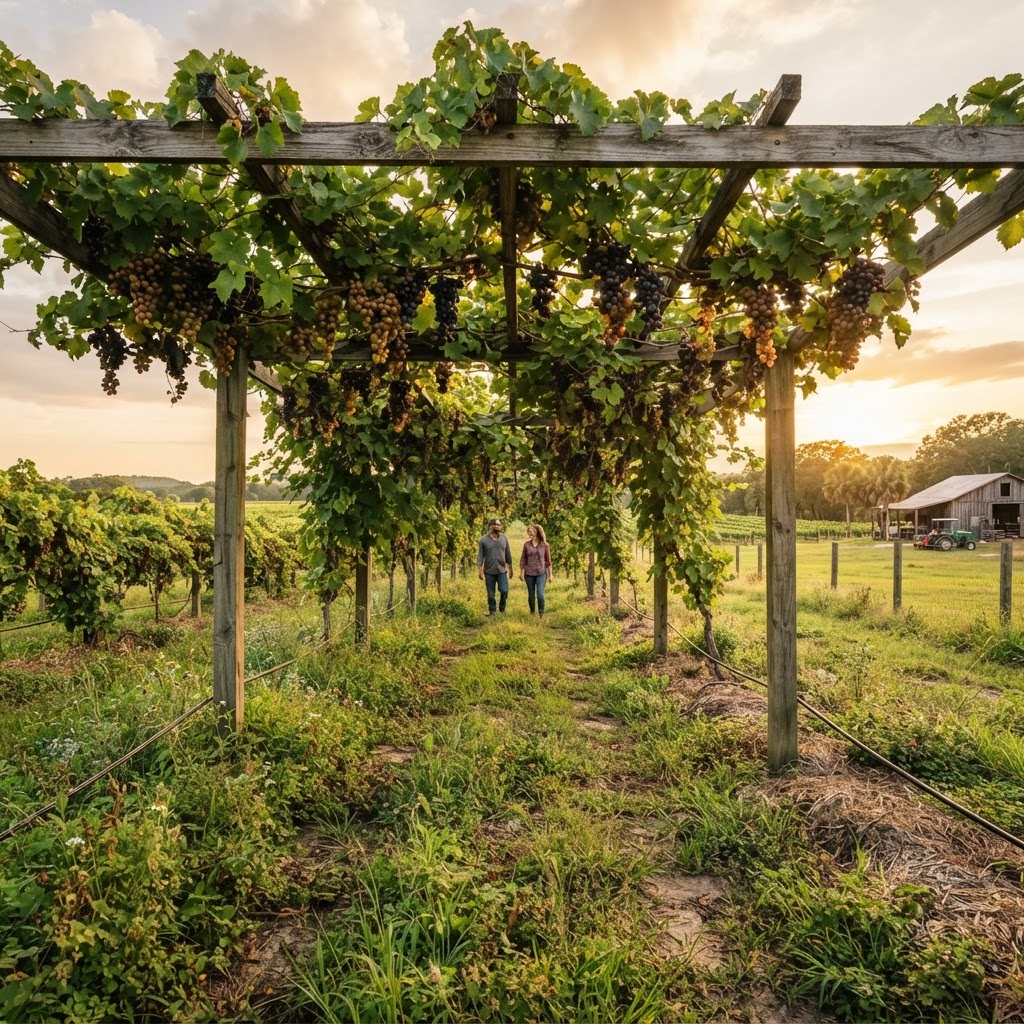
Rampart Farmstead · Southwest Florida
Muscadine Grapes
The South's native grape — tough, disease-resistant, and bursting with flavor. A guide to growing Welder, Traminette, and Carlos in Florida.
The Plant
Grapes Made for the South
Muscadines (Vitis rotundifolia) are native to the southeastern United States and have been cultivated here for centuries. Unlike European table grapes, muscadines are naturally resistant to Pierce's disease, the fungal pressures, and the relentless humidity that defeat most other grapes in Florida.
The fruit is distinctive — thick-skinned, intensely flavored berries that slip cleanly from the stem when ripe. That tough skin protects the grape and concentrates the flavor, making muscadines outstanding for fresh eating, juice, jelly, and wine.
At Rampart Farmstead we grow three standout varieties — a bronze, a hybrid, and a purple-black — each chosen for flavor, reliability, and performance in the Florida garden.
The Varieties
Three Worth Growing
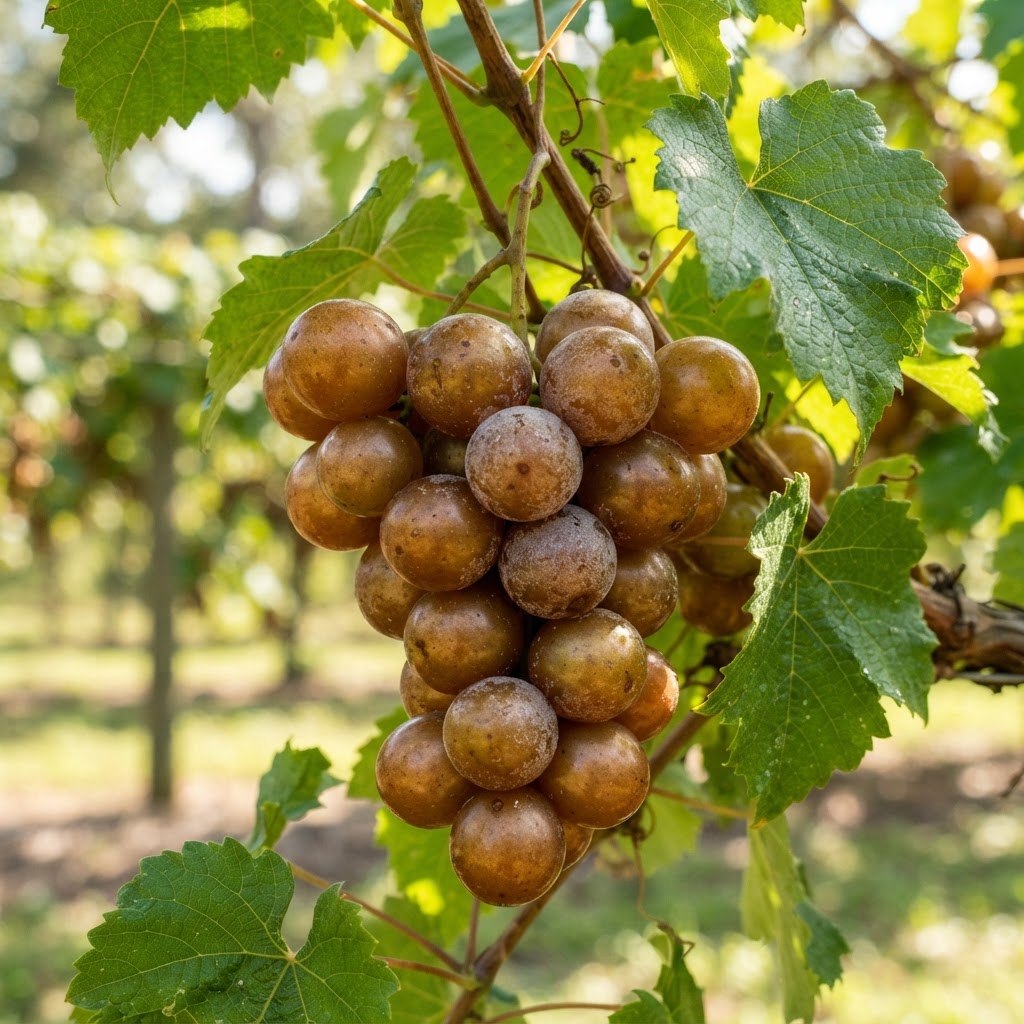
Bronze
Welder
A bronze-fruited muscadine prized for its large, sweet, mild-flavored grapes. Welder is a vigorous, disease-resistant vine that produces reliably in Florida and is excellent for fresh eating and wine.
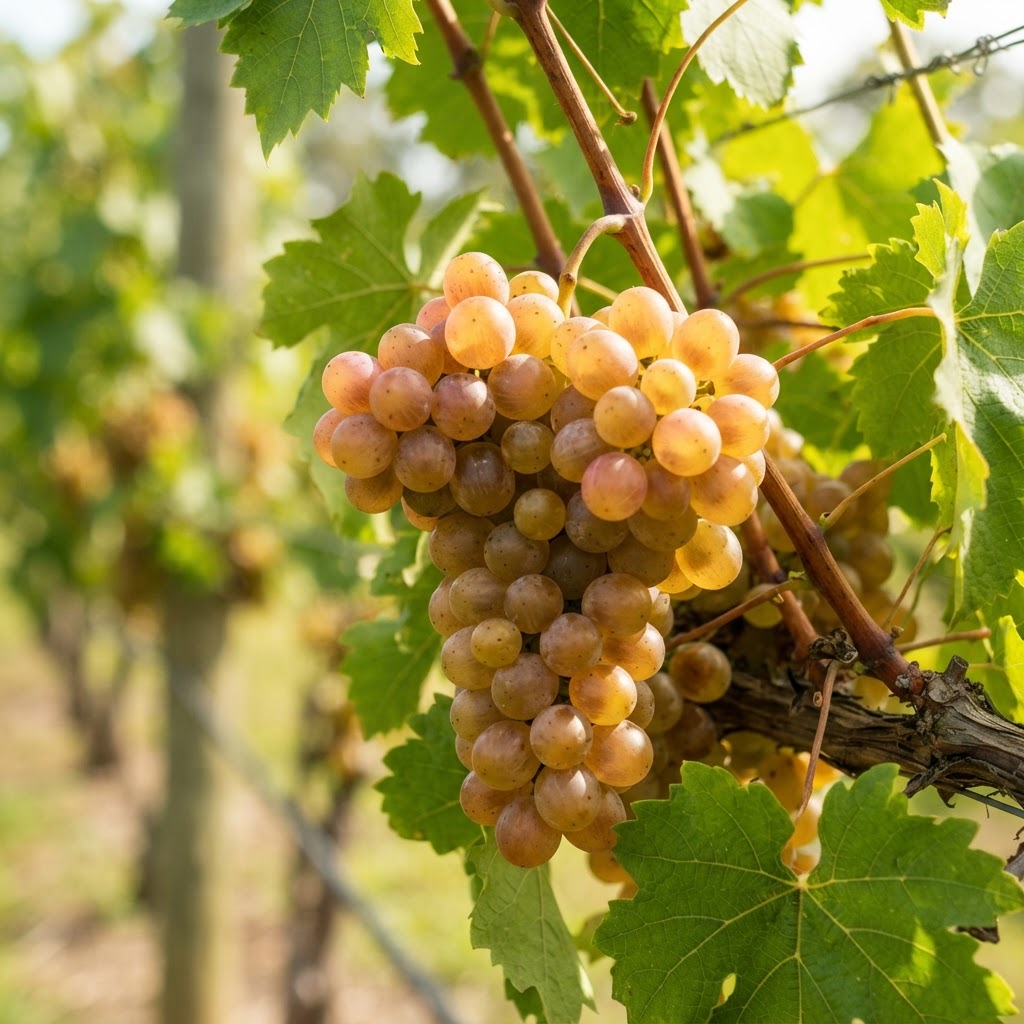
Golden-amber
Traminette
A hybrid wine grape with a spicy, floral aroma reminiscent of Gewürztraminer. Traminette ripens in tight clusters of golden-amber fruit and makes outstanding aromatic white wine in Florida.
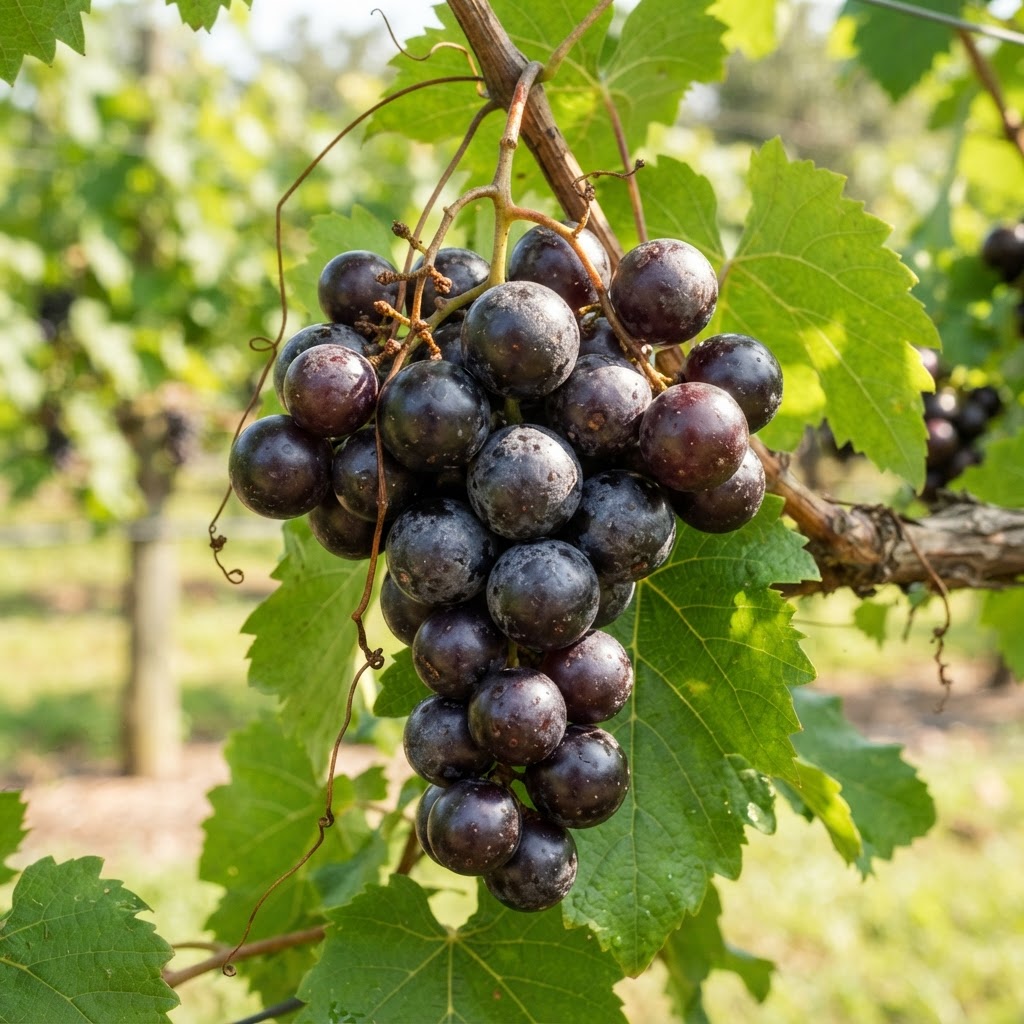
Purple-black
Carlos
A classic purple-black muscadine and one of the most popular for wine and juice. Carlos is self-fertile, highly productive, and a reliable pollinator for other female-flowered varieties.
Growing Guide
Growing in Florida
Muscadines are low-maintenance once established, but a little structure and yearly pruning keep them productive for decades.
Planting
Plant bare-root or potted vines in late winter to early spring while dormant. Space vines 10–20 feet apart on a sturdy trellis or arbor — muscadines are vigorous and need room and support to climb.
Sun & Exposure
Full sun for the sweetest fruit. Give muscadines at least 6–8 hours of direct sun. A south- or west-facing trellis with good air flow keeps the vines healthy and productive.
Watering
Water regularly the first year to establish a deep root system. Once established, muscadines are surprisingly drought-tolerant, but consistent moisture during fruit set and ripening gives the best crop.
Climate
Muscadines are native to the Southeast and perfectly adapted to Florida's heat, humidity, and pests. They thrive where European grapes struggle and need little disease spraying in a home planting.
Pruning
Prune hard every January. Cut back the previous season's growth to 2–3 buds per spur along the main cordons. This severe annual pruning keeps vines productive, manageable, and loaded with fruit.
Harvest
Pick grapes individually as they ripen in late summer to early fall — muscadines do not ripen all at once. Ripe fruit softens and pulls easily from the cluster. Refrigerate and use within a week or process for juice and wine.
A Note on Climate
Where European Grapes Fail, Muscadines Thrive
Florida's heat, humidity, and disease pressure are too much for most wine grapes — but muscadines evolved here. They laugh at the conditions that defeat vinifera and reward the grower with generous crops of intensely flavorful fruit. Plant once, prune each winter, and a single arbor can feed a family for a generation.
Back to Featured Items