Rampart Farmstead · Southwest Florida
Mulberries
One of the easiest and most generous fruits you can grow. A guide to Pakistan, Dwarf Everbearing, Mojo, and Shangri-la mulberries in southwest Florida.
The Plant
The Forgotten Fruit Tree
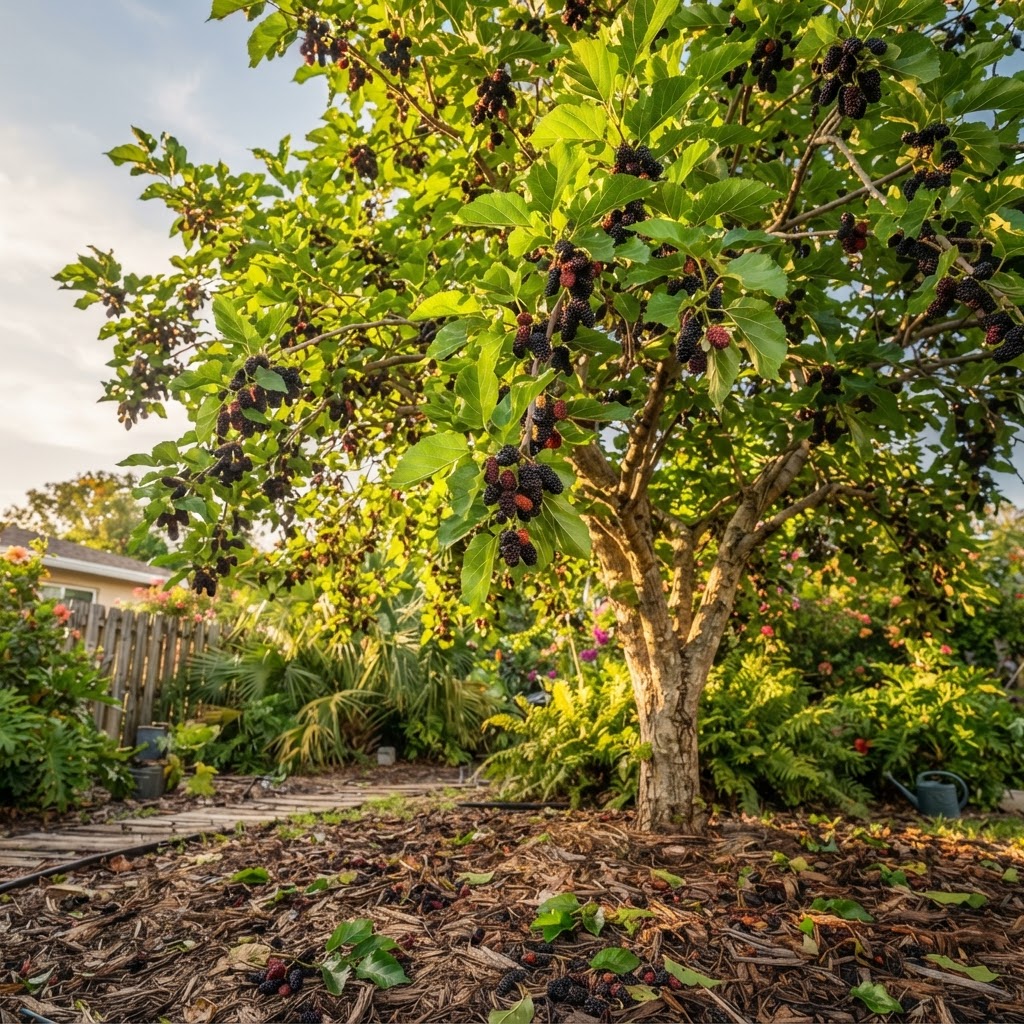
Mulberries are one of the most rewarding fruits a home grower can plant — fast-growing, nearly care-free, and astonishingly productive. A single tree can feed a family, and many varieties fruit within the first year of planting.
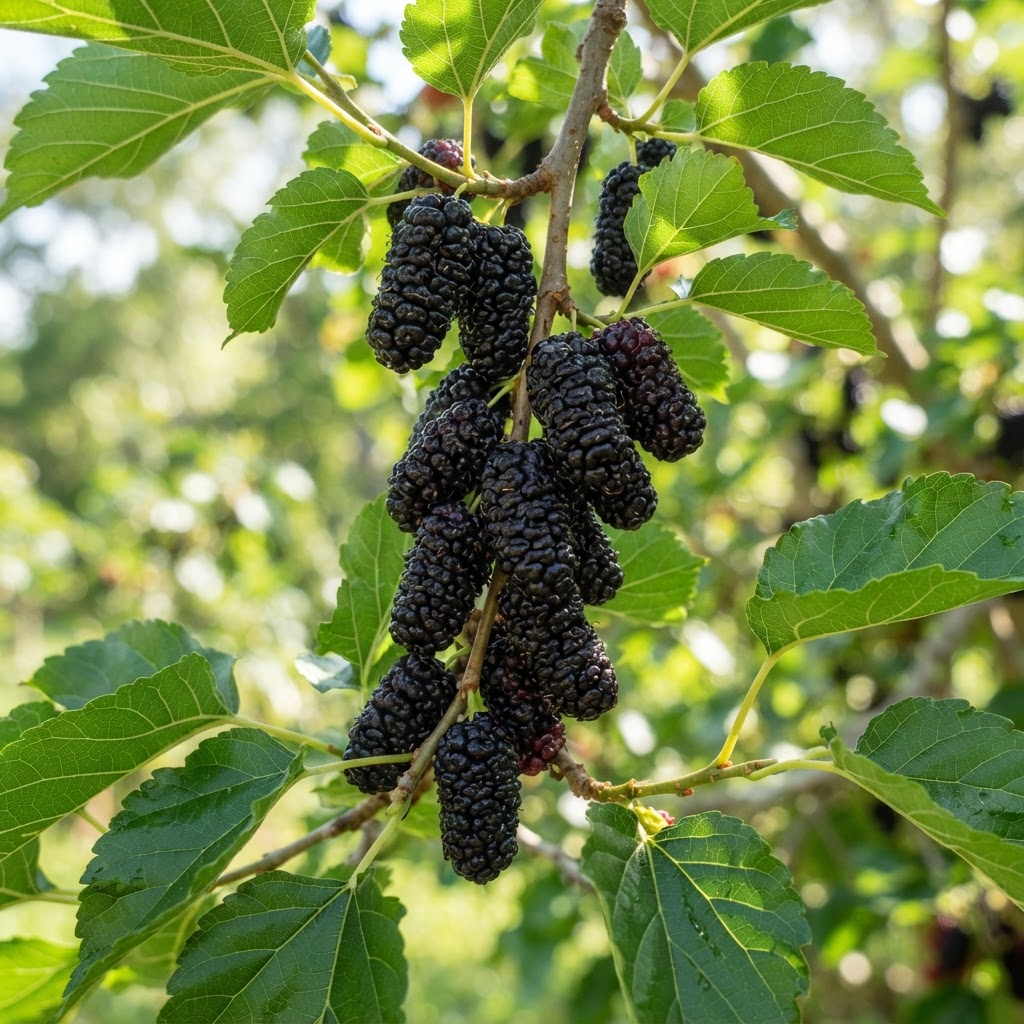
The berries ripen over a long window, changing from red to deep purple-black, and are best eaten sun-warmed right off the branch. Sweet, juicy, and packed with flavor, they taste like a cross between a blackberry and a grape — and they freeze and cook beautifully.
From the giant Pakistan to the compact everbearing dwarf, there is a mulberry for every yard in southwest Florida. Few trees give so much fruit for so little effort.
The Varieties
Four Worth Growing
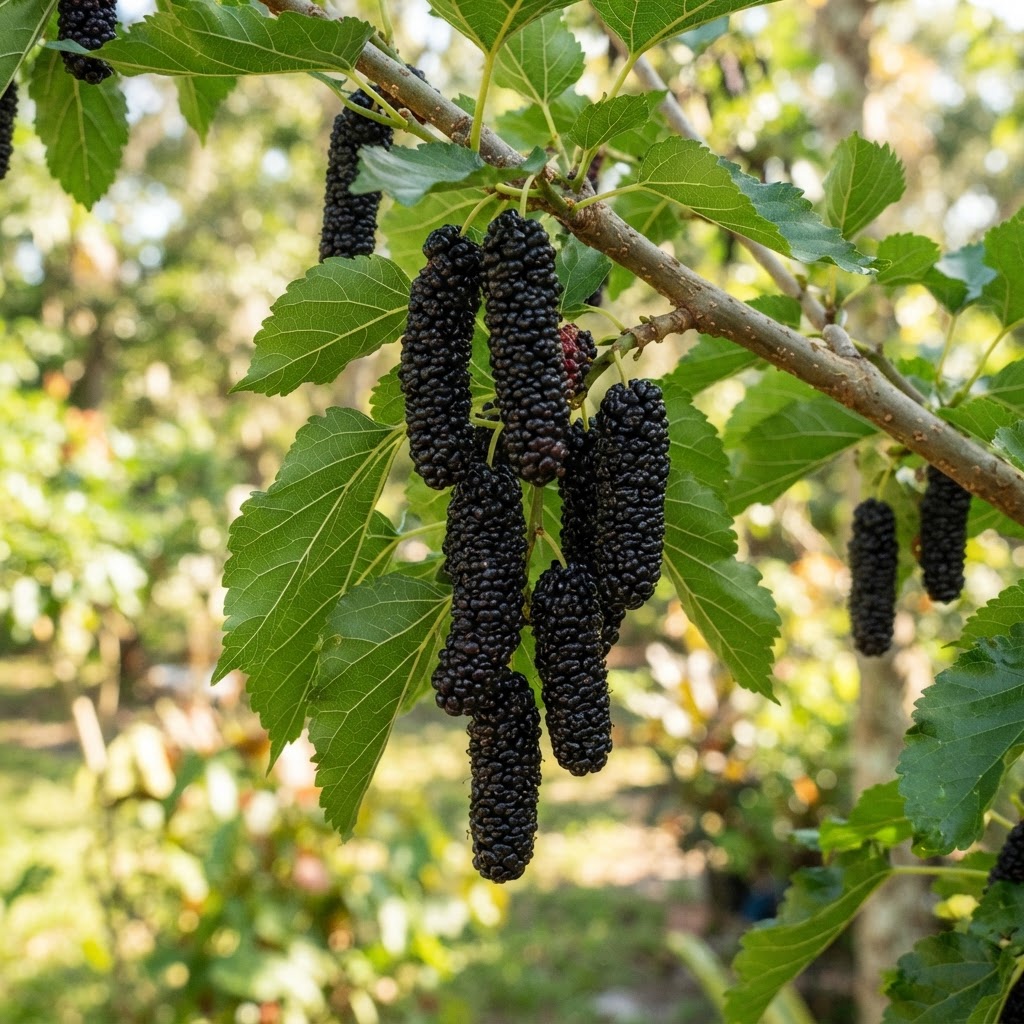
The long-fruited giant
Pakistan
Famous for its extraordinary finger-length mulberries — among the largest of any variety. Sweet, mild, and nearly seedless, with a long harvest. Pakistan grows into a large tree and is a showstopper in any Florida fruit garden.
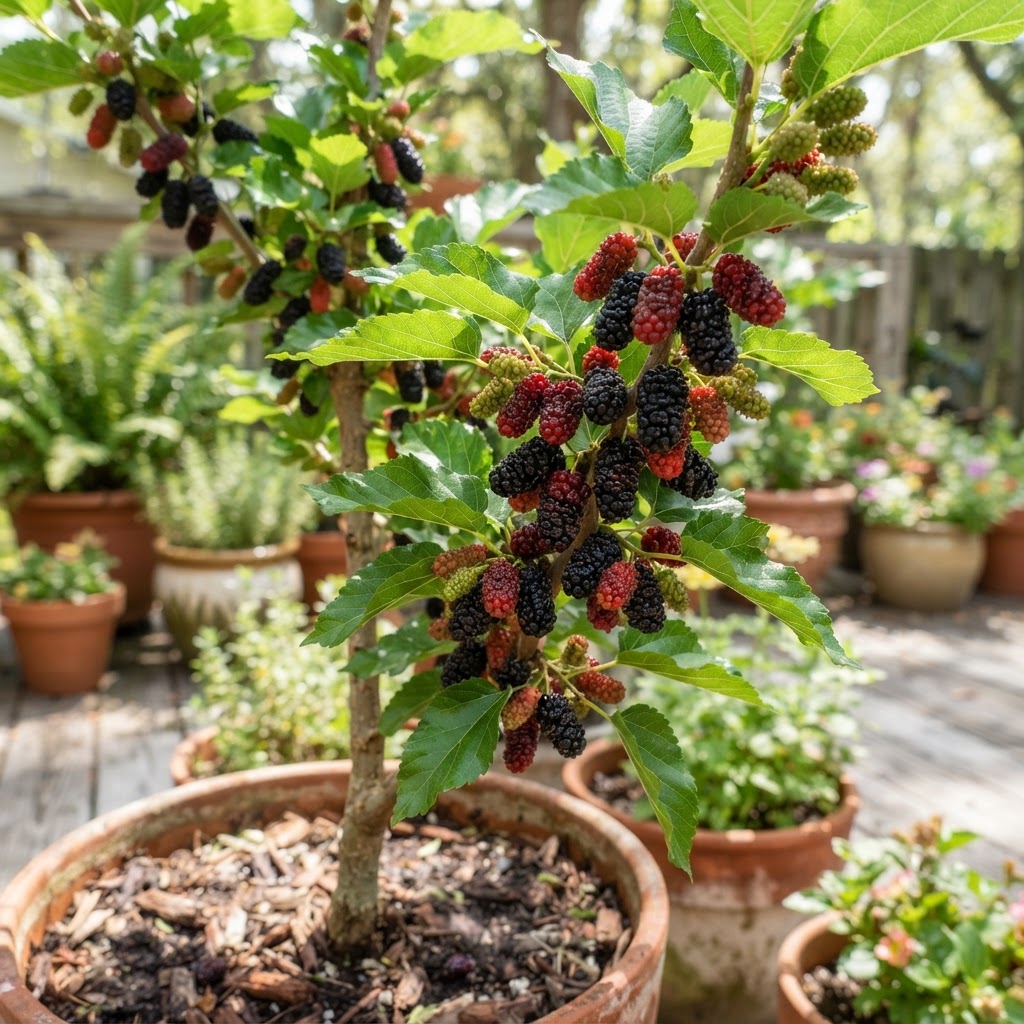
The container favorite
Dwarf Everbearing
A compact bush that fruits on and off all year in south Florida — perfect for small yards and containers. The small-to-medium berries ripen from red to deep purple and are sweet and rich. Often fruits the first year after planting.
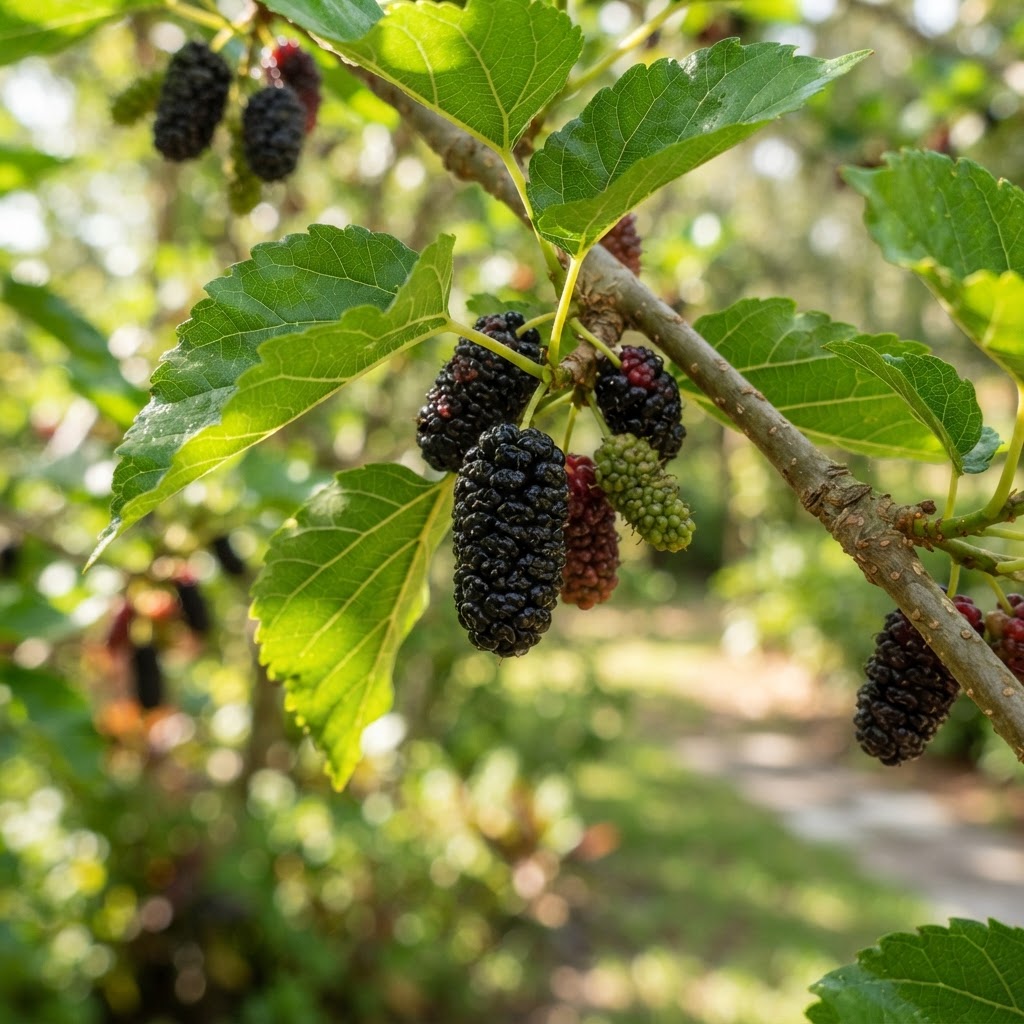
The sweet newcomer
Mojo
A newer selection prized for its exceptionally sweet, flavorful berries and reliable heavy crops. Mojo grows as a vigorous, manageable bush and produces medium-large dark mulberries over a long season. A great all-around home variety.
The heavy bearer
Shangri-la
A productive, disease-resistant variety with large juicy mulberries and a long fruiting season. Shangri-la grows quickly into a bushy small tree and is one of the most reliable and rewarding mulberries for the Florida home grower.
Growing Guide
Growing in Southwest Florida
Mulberries are among the most care-free fruit trees. Give them sun, water, and an annual prune, and they will reward you with buckets of fruit for years.
Planting
Plant in spring or early summer. Mulberries are forgiving of soil but love rich, well-drained earth amended with compost. Space dwarf varieties 6–10 feet apart; full-size trees like Pakistan need 15–20 feet. Dwarf everbearing does well in a large container.
Sun & Exposure
Full sun for the heaviest fruit. Mulberries want at least 6 hours of direct sun. They tolerate light shade but fruit best in full sun. In southwest Florida's intense summer, young plants establish faster with a little afternoon protection.
Watering
Water regularly to establish, then moderately once settled. Mulberries are fairly drought-tolerant but fruit best with consistent moisture. A thick mulch layer holds water and feeds the tree. Containers dry out faster — check daily in summer.
Climate
Mulberries thrive in southwest Florida's heat and are surprisingly adaptable. Everbearing varieties fruit nearly year-round here. Established trees handle brief freezes with little damage; young plants may need protection in a hard cold snap.
Pruning
Prune in winter to shape and control size. Mulberries bear on new wood, so pruning encourages fresh fruiting growth. Dwarf varieties can be kept small with annual pruning; large trees like Pakistan can be kept to a manageable height with summer tipping.
Harvest & Use
Pick when fully dark and soft — they do not keep, so eat or process within a day. Fresh off the tree is best, but mulberries also make superb jam, pies, smoothies, syrups, and frozen treats. Birds love them too — net if you want a share.
Using the Fruit
Sweet, Juicy & Endless
Mulberries are best eaten fresh — they are too soft to ship, which is why you almost never see them in stores. But that softness makes them perfect for jam, pies, cobblers, smoothies, syrups, and freezing. A single everbearing bush can keep a family in berries for months, and a Pakistan tree can produce more fruit than you know what to do with.
Back to Featured Items