Rampart Farmstead · Southwest Florida
Milkweed
The single most important plant you can grow for monarchs. A guide to tropical, white, butterfly, and giant milkweed in southwest Florida.
The Plant
Why Milkweed Matters
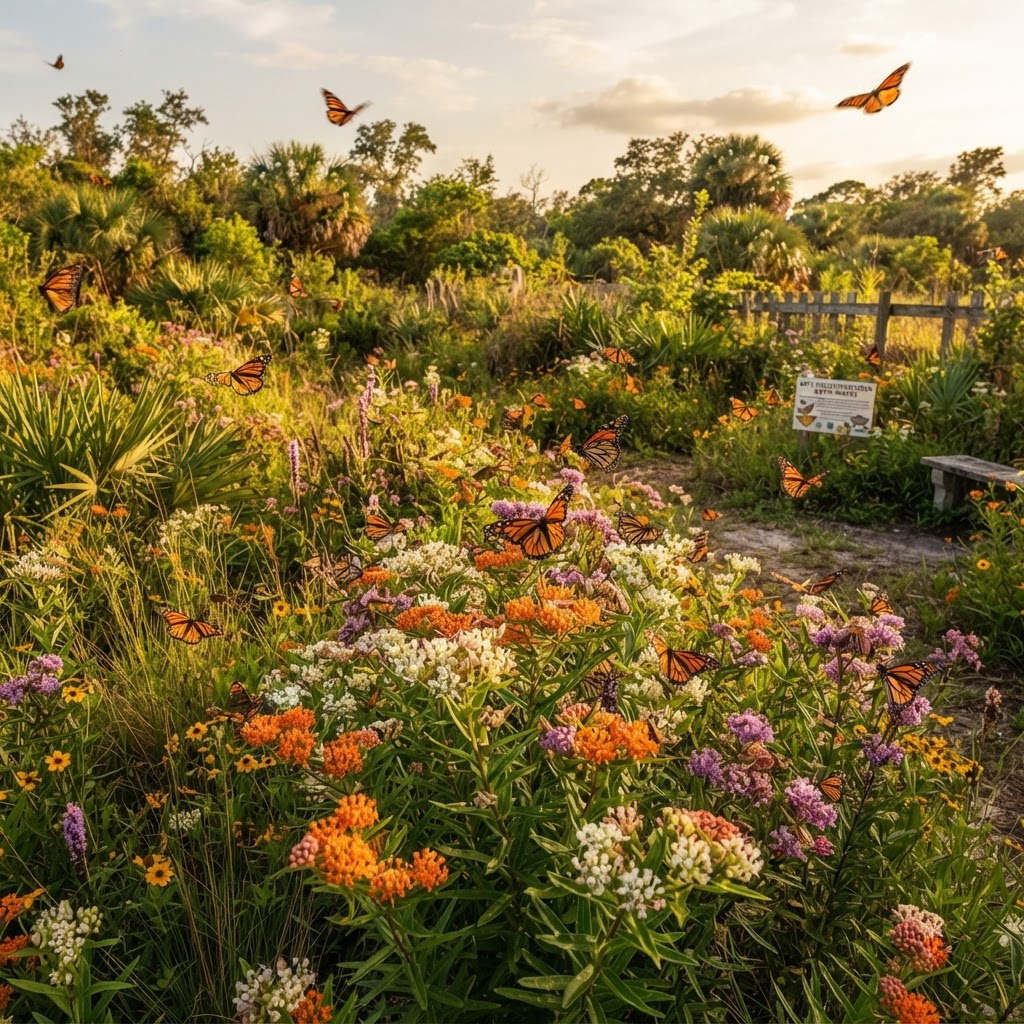
Milkweed is the only family of plants that monarch butterflies can lay their eggs on and the only food their caterpillars can eat. Without milkweed, there are no monarchs — it is that simple. As milkweed has disappeared from the American landscape, monarch populations have crashed, and every plant in a home garden helps.
But milkweed is far more than a monarch nursery. The nectar-rich blooms feed a huge range of pollinators — native bees, wasps, flies, and dozens of butterfly species — and the deep-rooted native varieties are tough, beautiful, and perfectly adapted to Florida.
Growing a mix of varieties gives you blooms across the seasons and supports monarchs through their entire Florida life cycle. Few plants give so much life back for so little effort.
The Varieties
Four Worth Growing
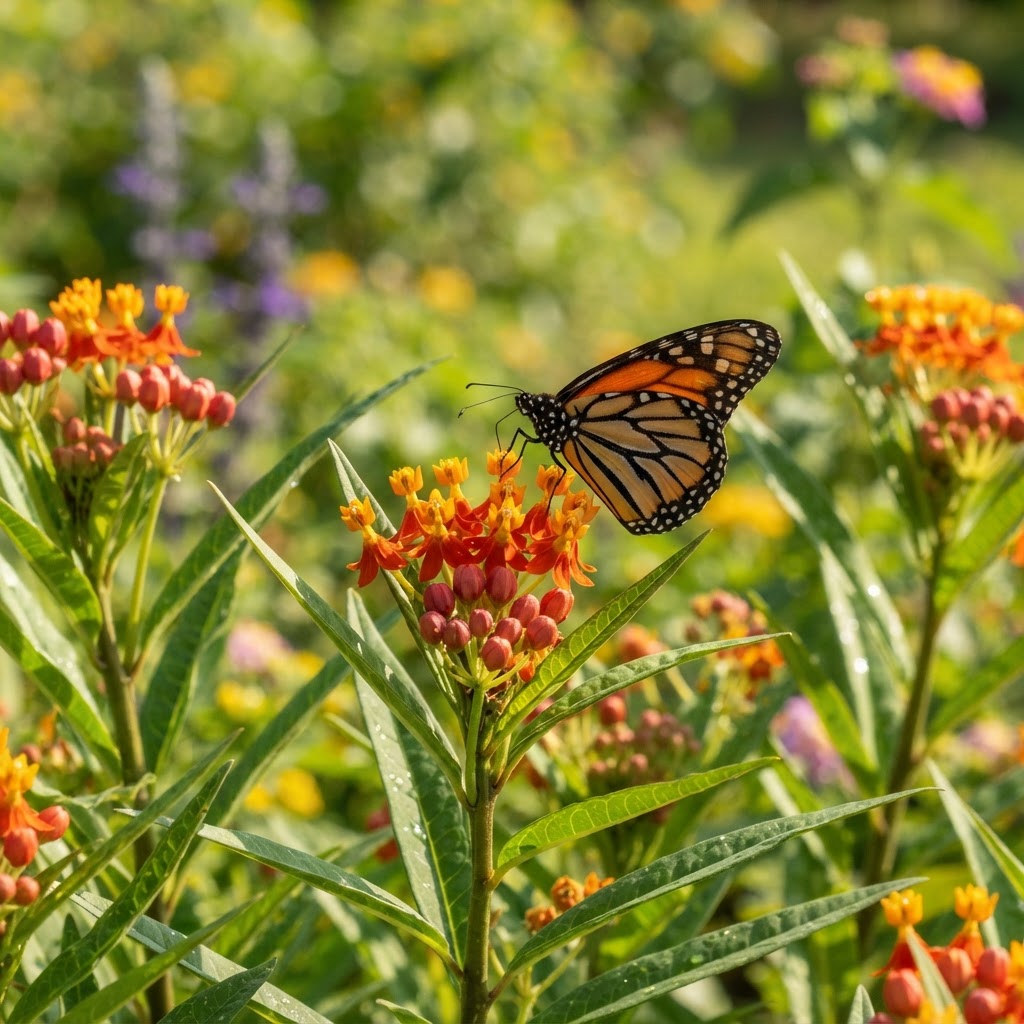
Orange & red bi-color
Tropical Milkweed
Asclepias curassavica — the showiest and easiest milkweed for Florida. Brilliant orange-and-red blooms flower nearly year-round and feed monarchs continuously. Cut back in fall to keep monarchs migrating and reduce disease.
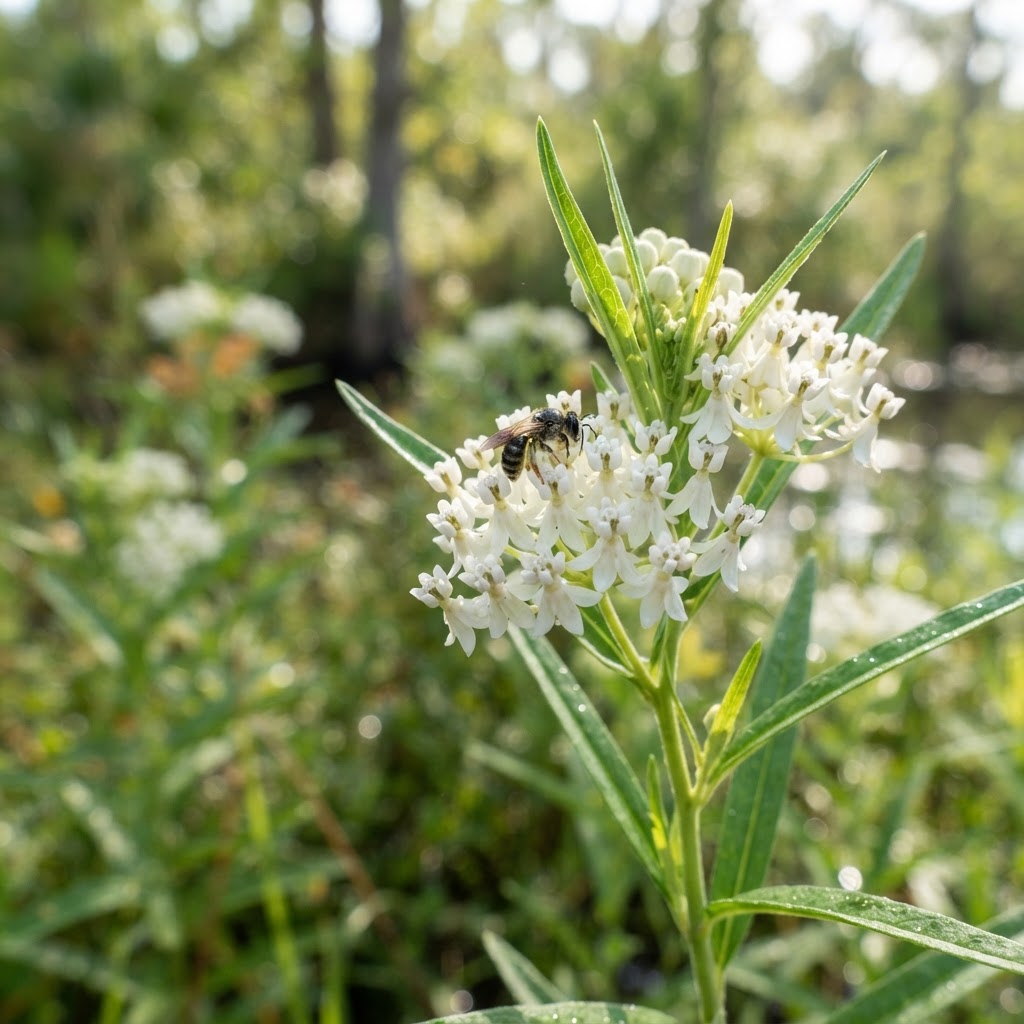
Pure white clusters
White Milkweed
Asclepias perennis — a delicate native Florida milkweed with clusters of small white flowers. Thrives in moist soils, tolerates wet feet, and quietly supports monarchs and native pollinators in damp or low spots.
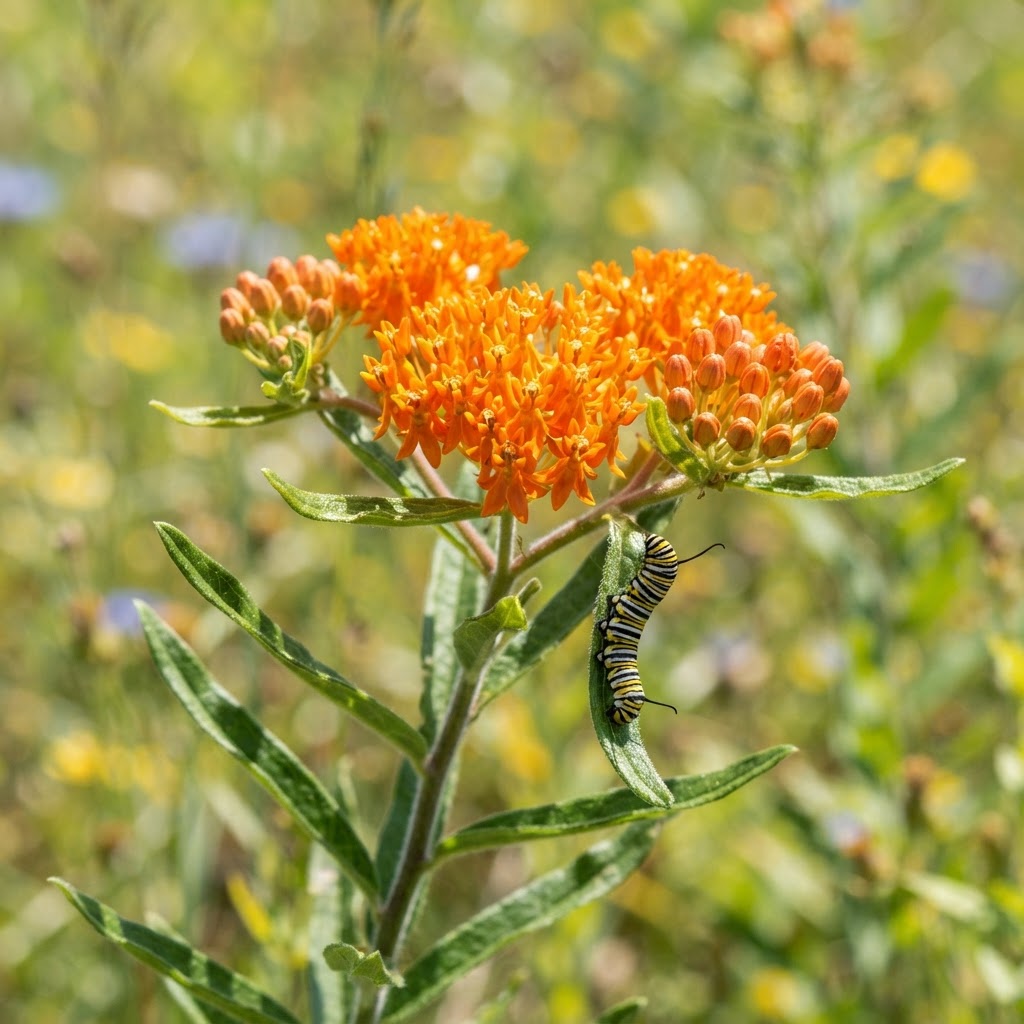
Fiery orange
Butterfly Weed
Asclepias tuberosa — a tough, drought-tolerant native with clusters of bright orange flowers. It does not have the milky sap of other milkweeds, making it especially safe for monarch caterpillars. A pollinator magnet.
Lavender-purple
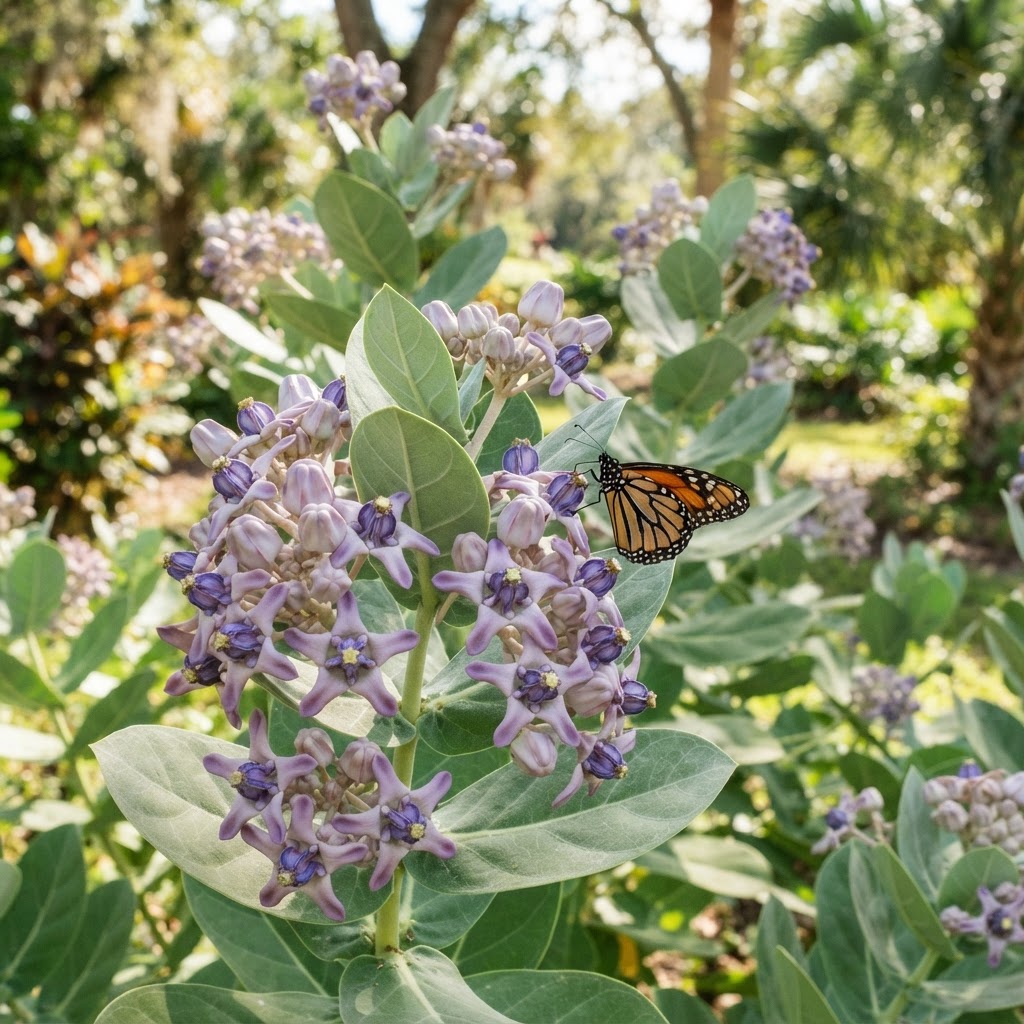
Giant Milkweed
Calotropis gigantea — a large shrub-like milkweed with big soft leaves and clusters of lavender star-shaped flowers. Monarchs love it, it blooms year-round, and it grows into a permanent woody anchor in the butterfly garden.
Growing Guide
Growing in Southwest Florida
Milkweed is easy and rewarding, but a few choices — the right varieties, the right spot, and a fall cutback of tropical milkweed — keep your patch healthy and the pollinators coming.
Planting
Plant in spring or fall. Native milkweeds prefer well-drained soil; white milkweed likes it moist. Space 1–3 feet apart. Giant milkweed needs room — it becomes a 6–8 foot shrub. Tropical milkweed grows fast from seed or cuttings.
Sun & Exposure
Full sun for the best bloom and the most pollinator traffic. All four varieties flower heaviest with at least 6 hours of direct sun. A little afternoon shade is fine in the peak of a southwest Florida summer.
Watering
Water new plants regularly to establish. Once settled, butterfly weed and giant milkweed are drought-tolerant; tropical milkweed is moderately so; white milkweed prefers consistent moisture. Avoid soggy soil for all but white.
Climate
All four thrive in southwest Florida's heat. Tropical and giant milkweed can bloom year-round here. Native butterfly weed and white milkweed die back in winter and return from the roots in spring.
Maintenance
Cut tropical milkweed to the ground each fall to interrupt disease cycles and encourage monarchs to migrate. Deadhead spent blooms to extend flowering. Giant milkweed can be pruned to shape as a small tree.
Pollinators
Milkweed is the only plant monarch caterpillars can eat — without it, there are no monarchs. The nectar-rich blooms also feed bees, wasps, and other butterflies. Plant a mix of varieties for a season-long pollinator buffet.
A Note on Pollinators
A Garden That Gives Life
A milkweed patch is one of the most meaningful things you can plant in southwest Florida. Every stem feeds monarch caterpillars, every bloom feeds a cloud of pollinators, and every garden that joins in helps stitch the monarch's path back together. Plant a few varieties, give them sun, and watch your garden come alive.
Back to Featured Items