Rampart Farmstead · Southwest Florida
Cranberry Hibiscus
A striking edible ornamental with deep burgundy leaves and a tart, cranberry-like flavor — easy to grow and endlessly useful in the southwest Florida garden.
The Plant
Beauty You Can Eat
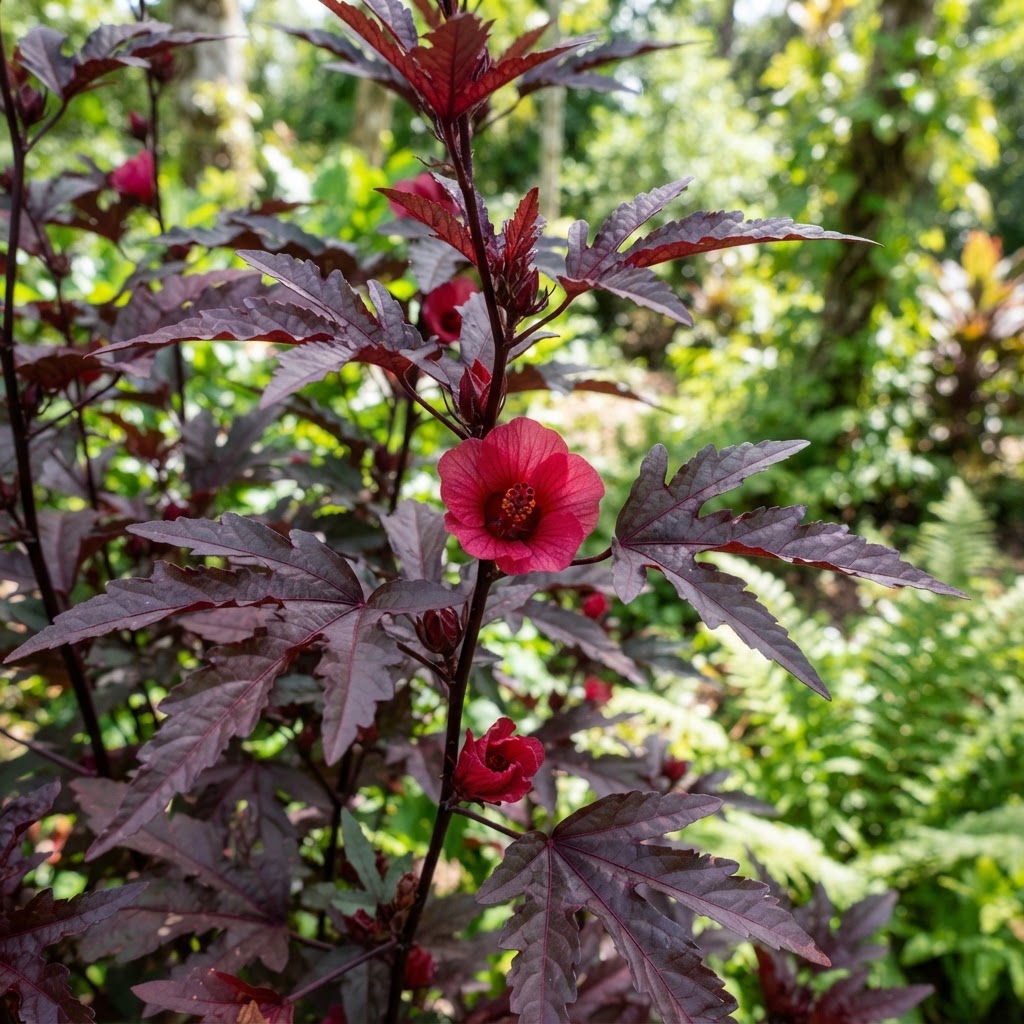
Cranberry hibiscus (Hibiscus acetosella) is a fast-growing member of the hibiscus family prized for its stunning, deeply cut leaves in shades of burgundy and red-purple. But it's far more than ornamental — the leaves are edible, with a bright, tart flavor reminiscent of cranberry and sorrel.
A single plant can reach 3–5 feet tall in a single season, producing a steady supply of tender leaves and, late in the season, delicate pink-red blooms. It's one of the most rewarding plants for a subtropical edible landscape.
Originally from Central Africa, cranberry hibiscus has found a happy home in southwest Florida, where it shrugs off the heat and humidity and keeps producing through the warm months.
Uses
How to Use It
Every part of cranberry hibiscus earns its place in the garden — from the dinner plate to the teacup to the landscape.
Edible Leaves
The young leaves are tart and crisp, with a bright, lemony zing. Add them raw to salads for a pop of color and flavor, or use them as a tangy garnish on fish and tropical dishes.
Cranberry-Red Tea
Steep the leaves in hot or cold water for a striking ruby-red tea with a tart, cranberry-like flavor. Sweeten lightly and serve over ice — a refreshing southwest Florida summer drink rich in antioxidants.
Ornamental Accent
With its deeply cut, burgundy foliage and delicate pink-red blooms, cranberry hibiscus is as beautiful as it is useful. Plant it as a striking accent in edible landscapes, hedges, or mixed borders.
Growing Guide
Growing in Southwest Florida
Cranberry hibiscus is one of the easiest plants to grow here — fast, forgiving, and generous with both color and flavor.
Planting
Start from cuttings or transplants in spring or early fall. Plant in well-draining soil enriched with compost, spacing 2–4 feet apart — cranberry hibiscus grows quickly and fills in fast, so give it room.
Sun & Exposure
Full sun to partial shade. In southwest Florida, full sun brings out the deepest, richest burgundy color. A little afternoon shade is fine and can keep plants lush during the hottest months.
Watering
Keep soil evenly moist while plants establish. Once settled, cranberry hibiscus is moderately drought-tolerant but produces the tenderest, most flavorful leaves with consistent watering.
Temperature
A tropical perennial grown as an annual in cooler climates, it loves southwest Florida's heat and humidity. It may survive mild winters here; a hard freeze will knock it back, but it often self-seeds and returns.
Pruning & Harvest
Pinch tips regularly to encourage bushier growth and more tender leaves. Harvest leaves anytime — younger leaves are most tender and tart. Regular harvesting keeps the plant compact and productive.
Feeding
Feed monthly with a balanced fertilizer during the growing season. Cranberry hibiscus is a fast grower — a single plant can reach 3–5 feet in a season, so a little feeding goes a long way.
A Note on Climate
A Subtropical Superstar
Cranberry hibiscus thrives where many herbs and greens struggle — in the heat and humidity of a southwest Florida summer. Plant it once and you'll likely have it for years, whether from the original plant or its generous self-seeded volunteers. Few plants offer so much beauty and so much flavor for so little effort.
Back to Featured Items