Rampart Farmstead · Southwest Florida
Clusia
The fast-growing, drought-tolerant privacy hedge of south Florida — thick, glossy, salt-tolerant, and nearly care-free in the southwest Florida garden.
The Plant
The Hedge Plant Florida Loves
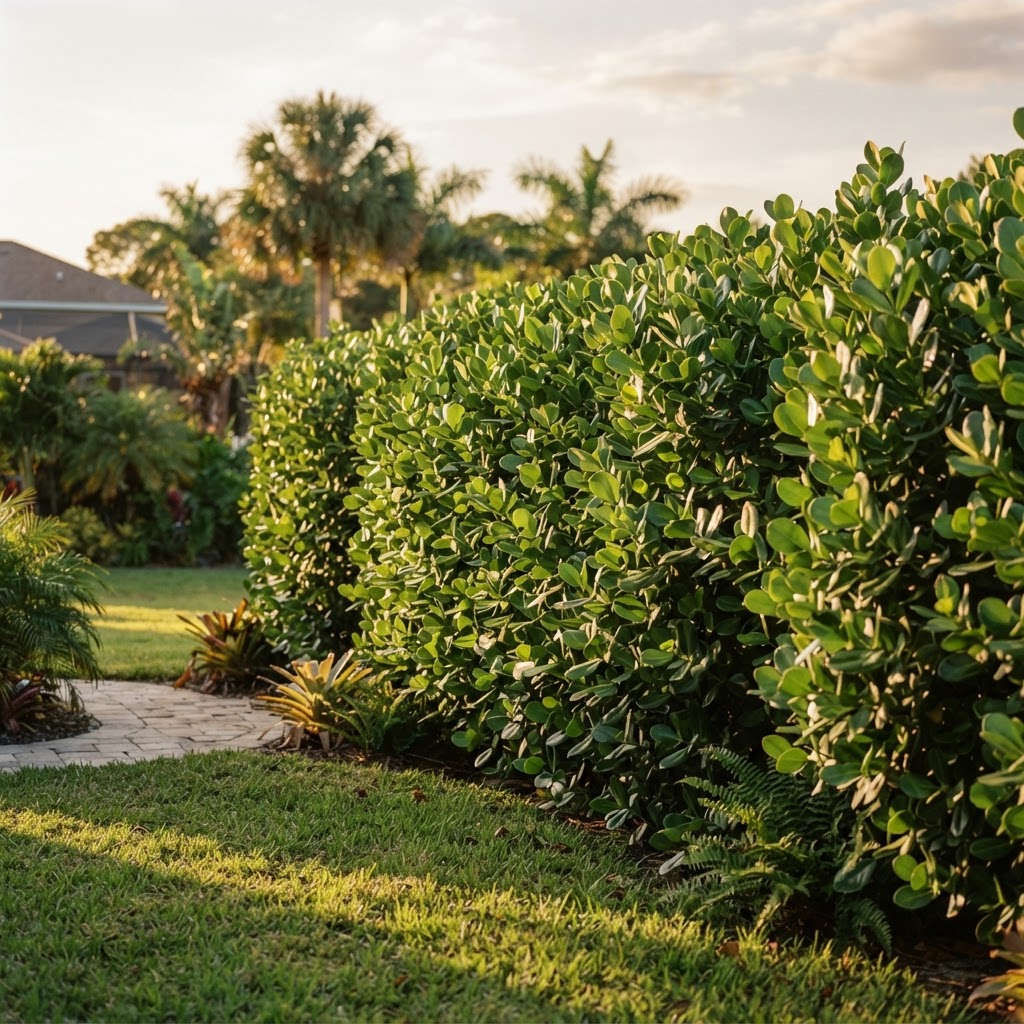
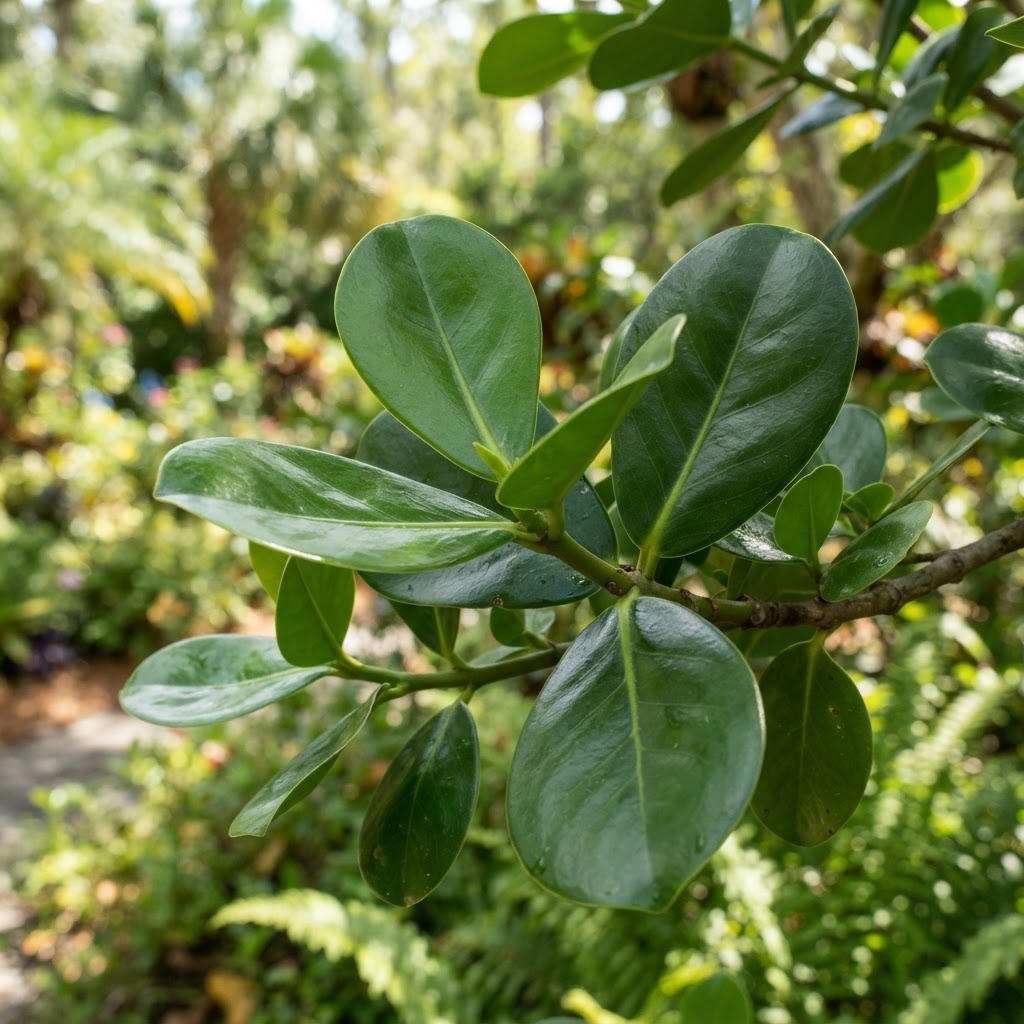
Clusia rosea, often just called Clusia or the autograph tree, is a broadleaf tropical native to the Caribbean. Its thick, paddle-shaped leaves are so glossy they look polished, and its dense, layered branching makes it a natural privacy screen.
In southwest Florida it has become one of the most popular hedge plants for good reason: it grows fast, fills in thick, tolerates sun, shade, salt, wind, and drought, and asks for almost nothing once established. Where ficus hedges freeze and podocarpus crawls, Clusia simply thrives.
Whether you want a tidy 4-foot border or a 15-foot wall of green, Clusia is one of the most reliable, rewarding plants you can put in the ground in south Florida.
The Foliage
As a Privacy Hedge
Why It Makes a Great Hedge
Fast, Thick, and Almost Effortless
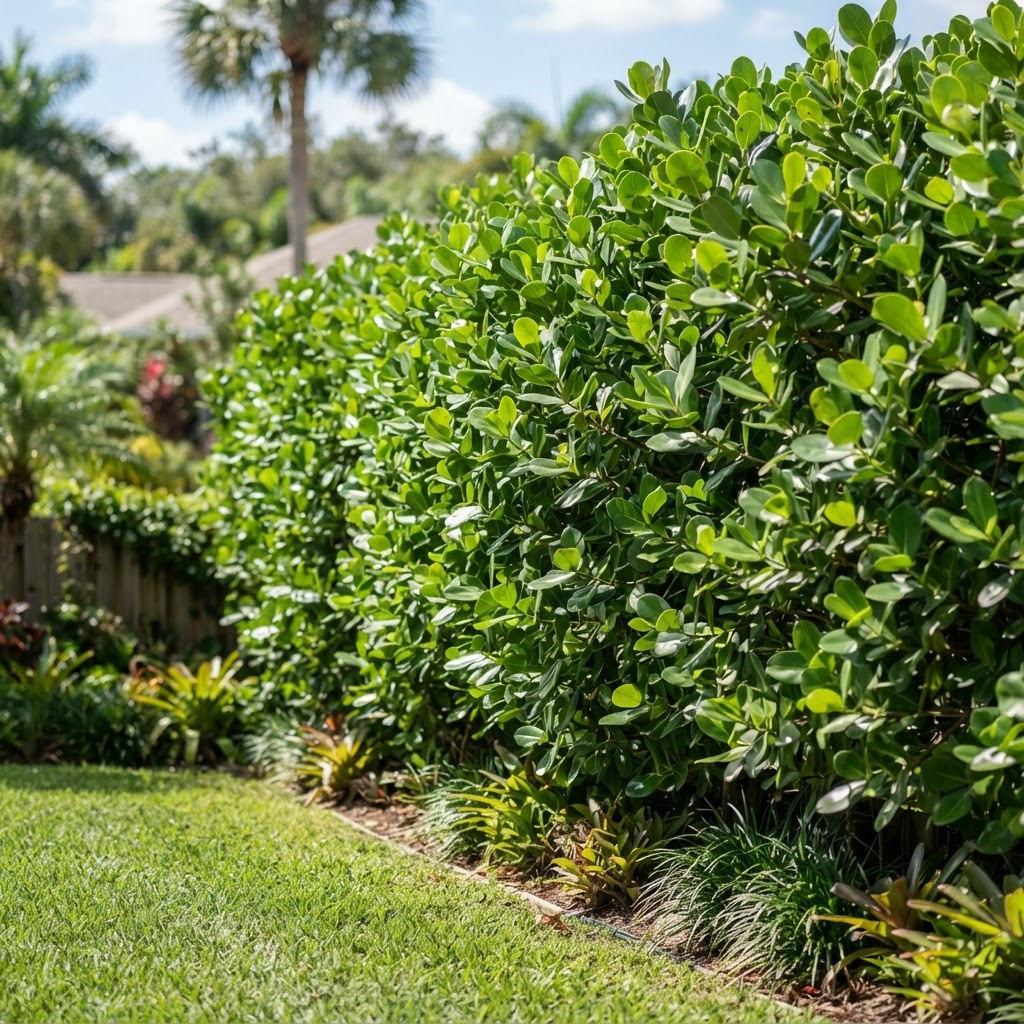
Clusia is one of the fastest-growing hedges available in south Florida, often adding 2–3 feet of growth in a single season. Planted 2–3 feet apart, a row fills in to a solid wall of green within a year or two — far faster than most traditional hedge plants.
Its dense, layered branching holds leaves from top to bottom, so it blocks views, wind, and noise without going thin and bare at the base. The thick leaves are salt-tolerant, making it a top choice for coastal properties, and it shrugs off the salt, sand, and wind that burn other hedges.
Best of all, it is low-maintenance: drought-tolerant once established, rarely bothered by pests or disease, and easy to shape with a simple trim a few times a year. For a privacy screen that actually thrives in south Florida, Clusia is hard to beat.
Growing Guide
Growing in Southwest Florida
Clusia is one of the easiest hedges to grow in south Florida. Plant it, water it in, and give it an occasional trim — it does the rest.
Planting
Plant in spring or summer at the start of the rainy season. For a hedge, space Clusia 2–3 feet apart in a single row — they will fill in and touch within a year. Dig a hole twice the pot width, set the plant at the same depth it grew in the container, and water in well.
Sun & Exposure
Clusia is remarkably adaptable. It thrives in full sun to partial shade, and even handles fairly deep shade. For the densest, glossiest hedge, give it at least half a day of sun. In southwest Florida it takes full, baking sun where many other hedges scorch.
Watering
Water regularly to establish, then taper off. Once settled, Clusia is drought-tolerant and needs little supplemental water. The first 3–4 months are the most important — keep the root zone moist but not soggy while roots knit into the surrounding soil.
Climate
A true tropical, perfectly at home in southwest Florida's heat and humidity. It is hardy to about zone 10 and tolerates our mild winters without fuss. Young plants may burn in a hard freeze; established hedges shrug off brief cold snaps and resprout if damaged.
Pruning
Clusia takes pruning beautifully and is easy to keep as a neat, formal hedge. Trim lightly every few months to encourage branching and dense growth. For a fast privacy screen, let it grow to the height you want, then maintain with regular trims. It can be kept 4 feet tall or allowed to reach 10–20 feet.
As a Hedge
Few plants make a better privacy hedge in south Florida. Clusia grows fast — often 2–3 feet a year — fills in densely, and holds a tidy shape with minimal care. Its thick, salt-tolerant leaves block wind, noise, and views, and it rarely suffers from the pests and diseases that plague other hedges.
A Note on Climate
Built for South Florida
Clusia is a tropical plant built for exactly the conditions southwest Florida throws at it — heat, humidity, salt, wind, and long dry spells. It grows fast, fills in thick, and stays handsome with barely any effort. For a privacy hedge that actually thrives here rather than merely surviving, Clusia is one of the best choices a south Florida gardener can make.
Back to Featured Items