Rampart Farmstead · Southwest Florida
Barbados Cherry
Also known as acerola — a fast-fruiting tropical shrub that pumps out sweet-tart, vitamin-packed cherries almost year-round in southwest Florida.
The Plant
The Vitamin C Champion
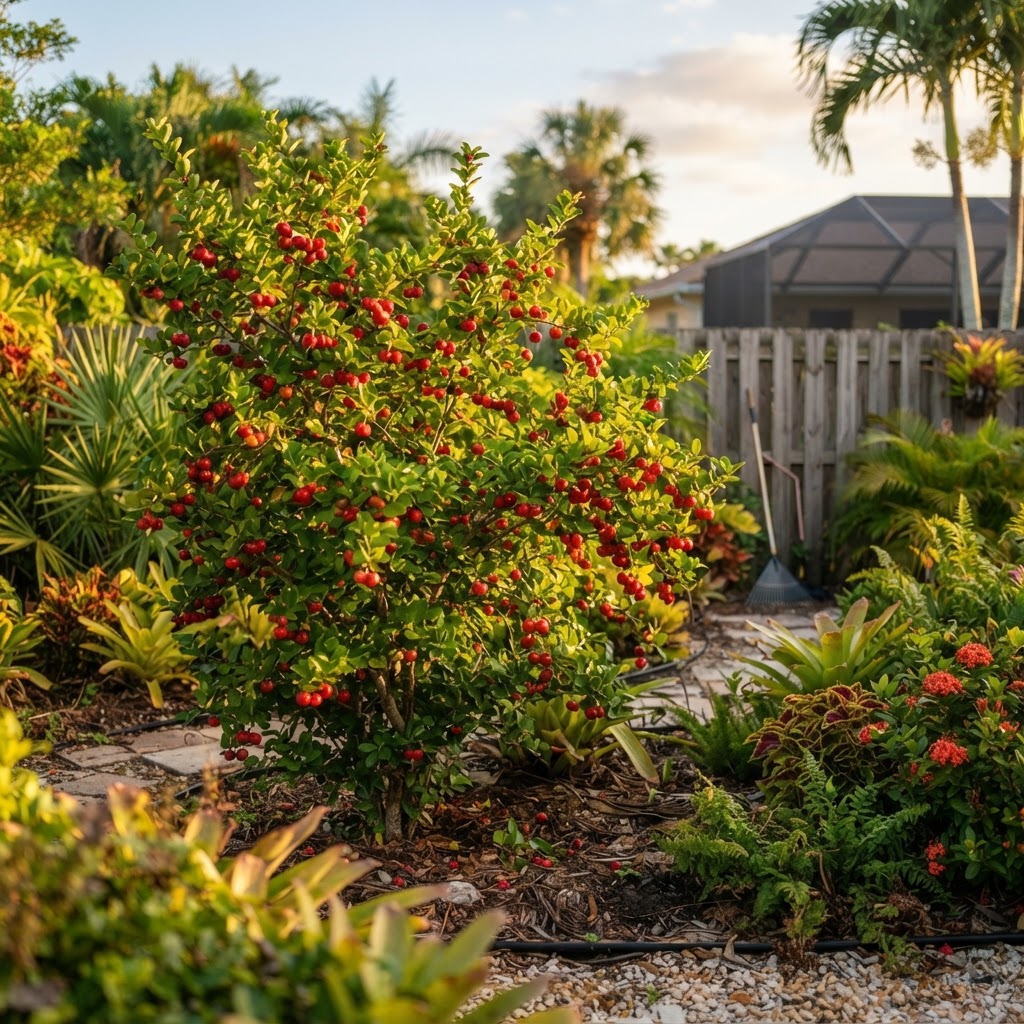
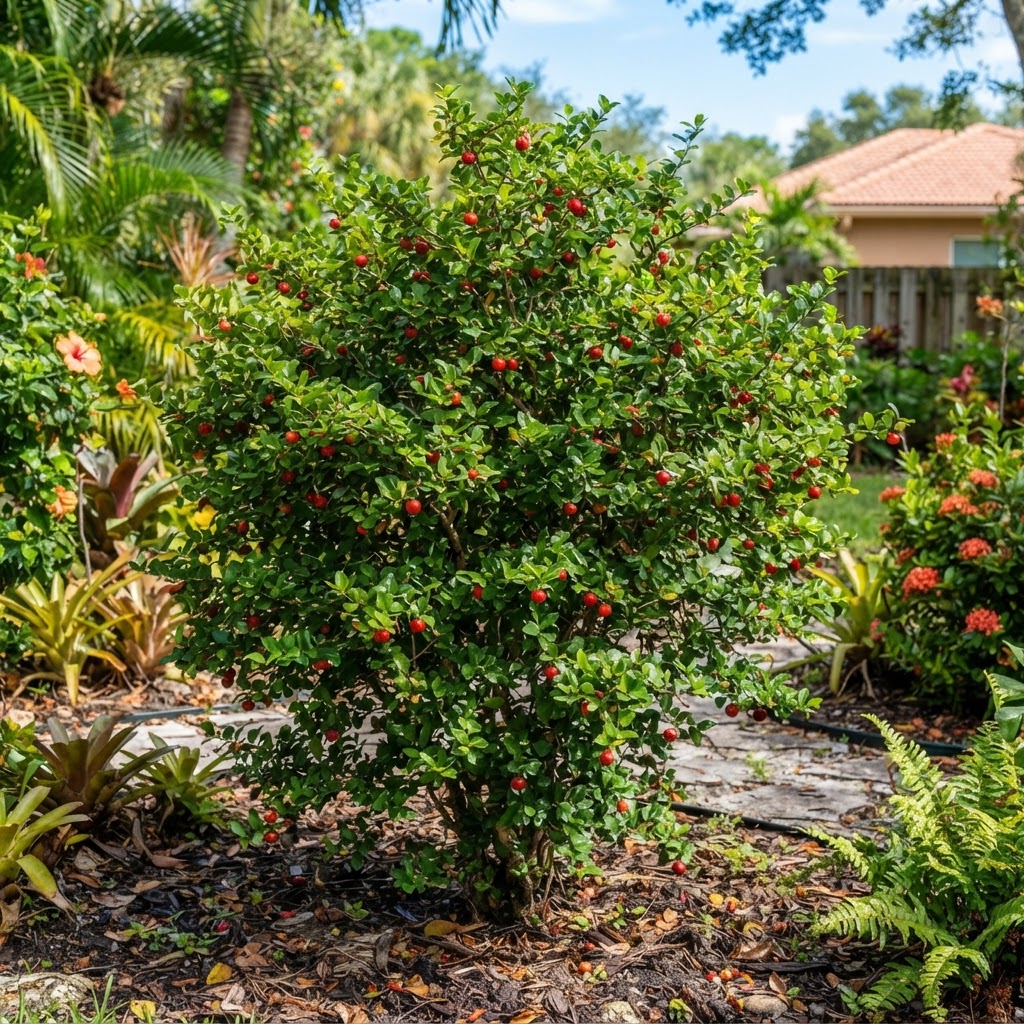
Barbados cherry (Malpighia punicifolia), also called acerola or West Indian cherry, is a small tropical shrub native to the Caribbean and Central and South America. It has found a happy home in south Florida, where the heat and humidity it loves are never in short supply.
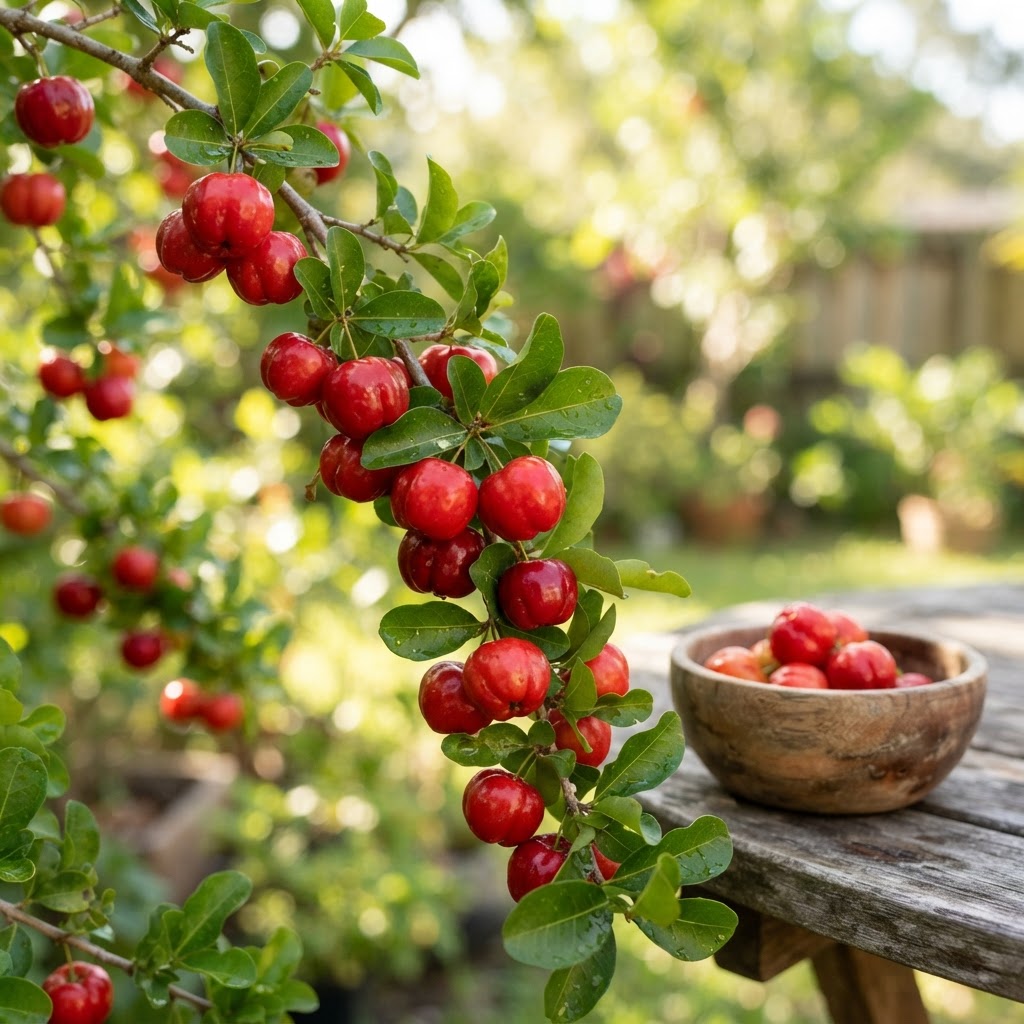
The fruit looks like a miniature cherry — bright red, glossy, and about the size of a cherry — but it hides an extraordinary secret: it is one of the richest natural sources of vitamin C on earth, with far more per fruit than an orange. The flavor is sweet-tart and refreshing, somewhere between a cherry, an apple, and a citrus.
Few fruiting shrubs are as generous. A single healthy plant can fruit several times a year in southwest Florida, and a small hedge of them turns a sunny corner into a steady supply of one of the most nutritious fruits you can grow.
The Fruit
The Shrub
Growing Guide
Growing in Southwest Florida
Barbados cherry is one of the easiest tropical fruits to grow. Give it sun, water, and a little food, and it will reward you with fruit for years.
Planting
Plant in spring or early summer. Barbados cherry is a bushy shrub that reaches 6–10 feet. Space 5–8 feet apart, in well-drained soil amended with compost. A sunny, sheltered spot gives the heaviest fruit set.
Sun & Exposure
Full sun for the best fruit. Barbados cherry wants at least 6 hours of direct sun. In southwest Florida's intense summer, young plants benefit from light afternoon shade until established; mature plants take full sun.
Watering
Keep soil consistently moist, especially while fruiting. Drought-tolerant once established, but dry spells cause fruit drop. A 2–3 inch mulch layer holds moisture and feeds the shallow roots.
Climate
Truly tropical and perfectly suited to southwest Florida. It loves heat and humidity and fruits nearly year-round. Protect from hard freezes — a brief frost may burn leaves, but established plants resprout from the base.
Maintenance
Prune lightly to shape and remove dead wood. Barbados cherry can be trained as a small tree or kept as a bushy hedge. Feed with a balanced fruit fertilizer 3–4 times a year for steady production.
Harvest & Use
Pick when fully red — fruit ripens quickly and does not store long. Eat fresh, blend into smoothies, or make jams, jellies, and syrups. The cherries are famously rich in vitamin C — far more than an orange.
Using the Fruit
Sweet, Tart & Endlessly Useful
Barbados cherries are best eaten fresh the day they are picked — sun-warmed and straight off the bush is hard to beat. But they also shine in the kitchen: blended into smoothies and juices, cooked down into vivid red jams and jellies, simmered into syrups for pancakes and cocktails, or frozen whole for a vitamin-C boost all winter. A single shrub gives a family more than enough.
Back to Featured Items