Rampart Farmstead · Southwest Florida
Banana Plants
Nothing says tropical like a backyard banana. A guide to growing Double Mahoi, Dwarf Cavendish, Truly Tiny, Gran Nain, and Blue Java in southwest Florida.
The Plant
The Backyard Tropics
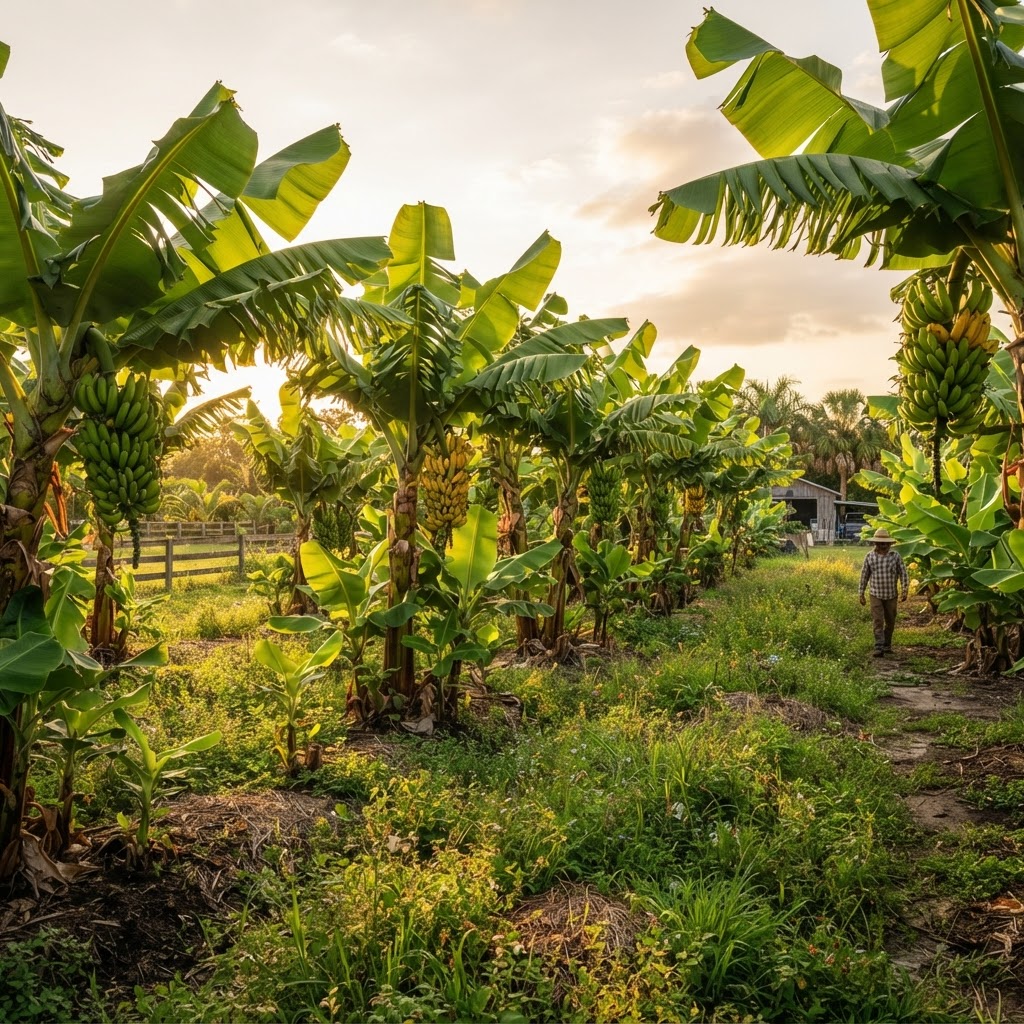
Bananas are not trees — they are giant herbaceous plants, the largest in the world. Each "trunk" (a pseudostem of layered leaf sheaths) grows, fruits, and dies in a single cycle, while new shoots (pups) rise from the underground corm to take its place. A healthy clump fruits year after year for decades.
South and central Florida are banana country. The long hot season, abundant rainfall, and mild winters let bananas grow nearly year-round, and the rich organic mulch they love is easy to build in a regenerative garden.
From the tiny ornamental Truly Tiny to the legendary Blue Java "ice cream" banana, there is a variety for every yard — and few plants reward the grower with as much food, shade, and tropical beauty for so little effort.
The Varieties
Five Worth Growing
Sweet dessert banana
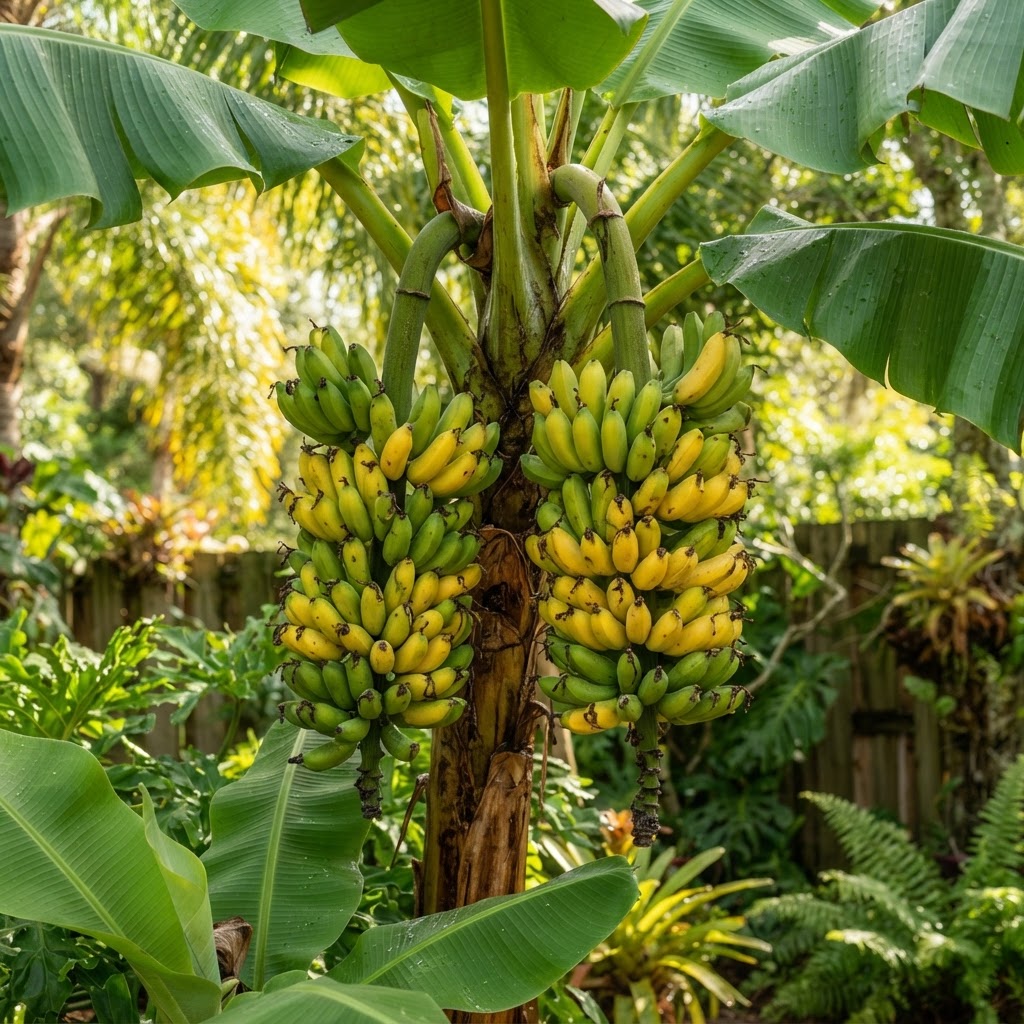
Double Mahoi
A rare mutation of the Dwarf Cavendish that famously produces TWO large bunches of bananas on a single stem in its second fruiting cycle. Sweet, creamy, and prolific — a showpiece for the home grower.
Classic grocery-store banana
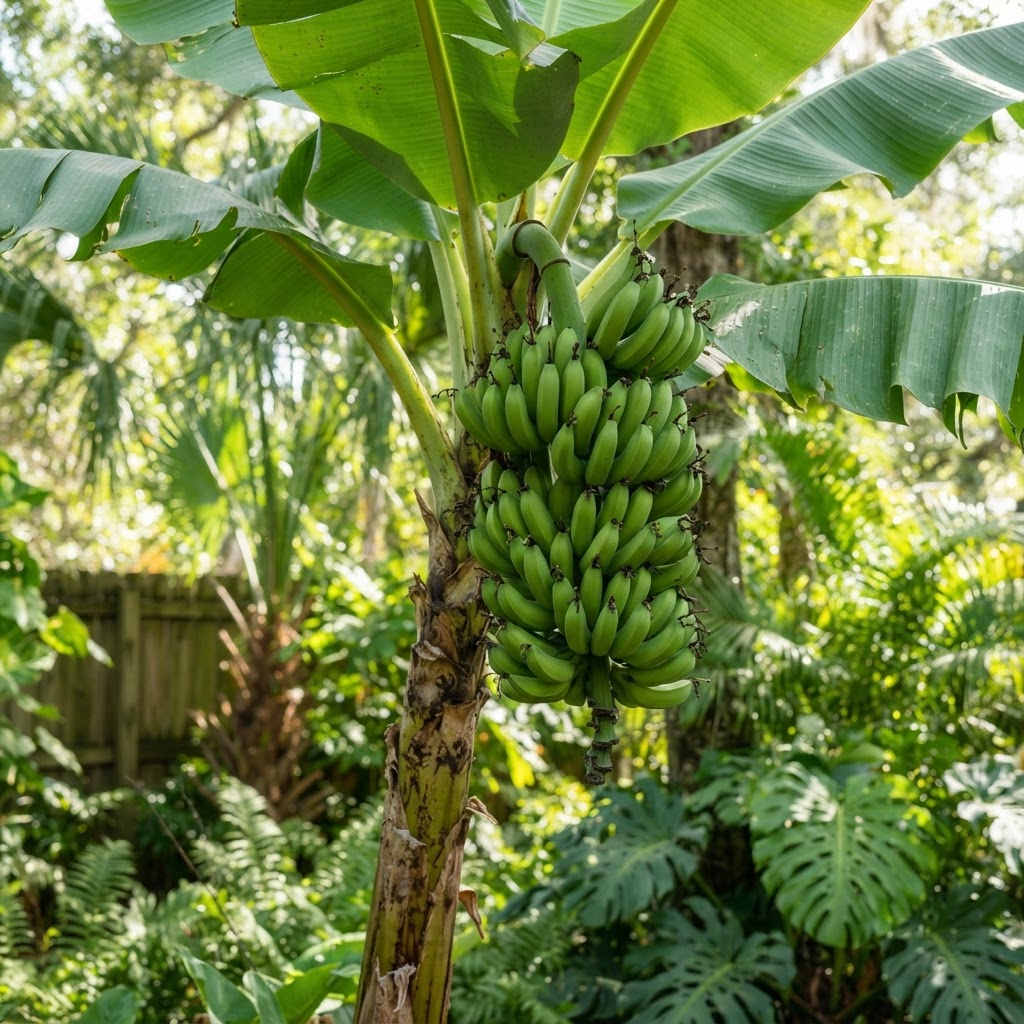
Dwarf Cavendish
The reliable workhorse of the home banana patch. Compact at 6–8 feet, it fruits heavily in Florida and produces the familiar sweet, mild Cavendish flavor. Excellent for small yards and containers.
Ornamental & edible
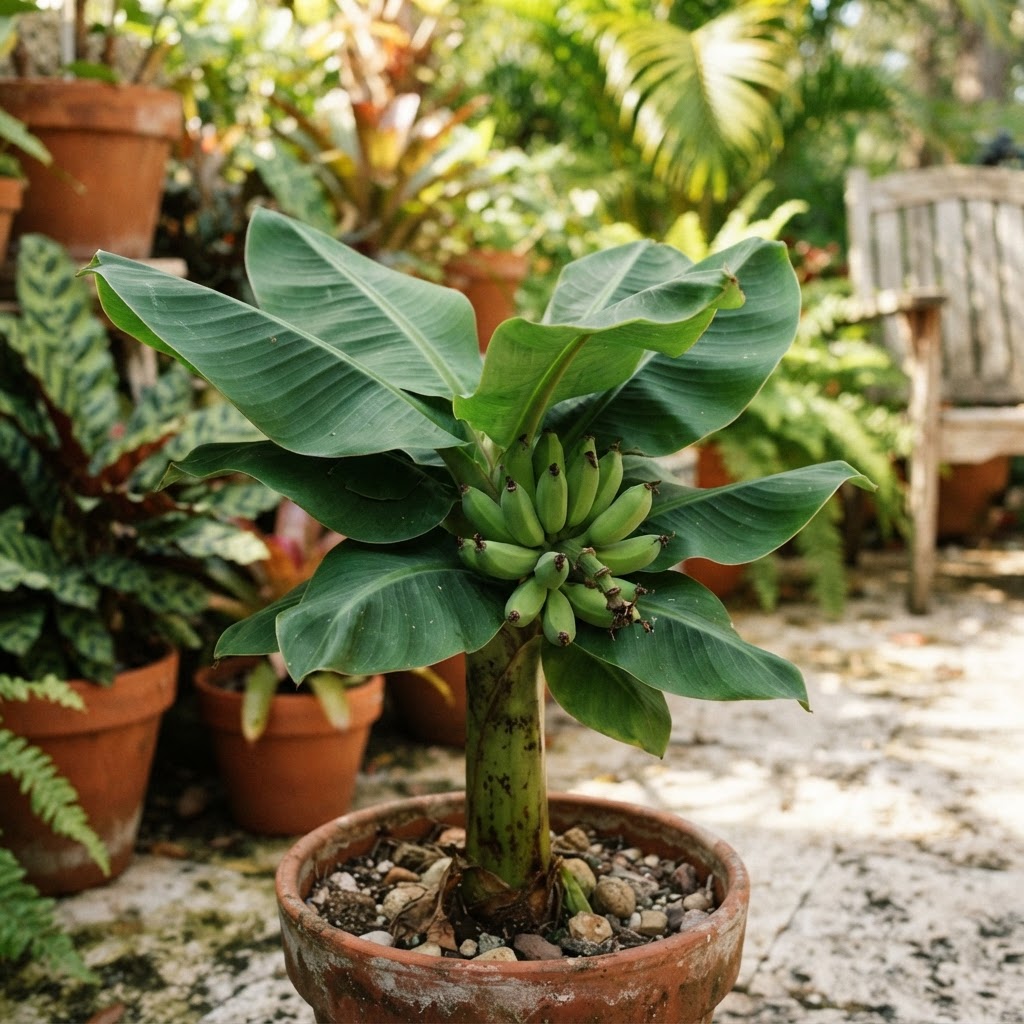
Truly Tiny
The smallest edible banana — often under 4 feet. Perfect for containers, patios, and tight spaces. It bears small, sweet bananas and adds a true tropical look without taking over the garden.
Commercial dessert banana
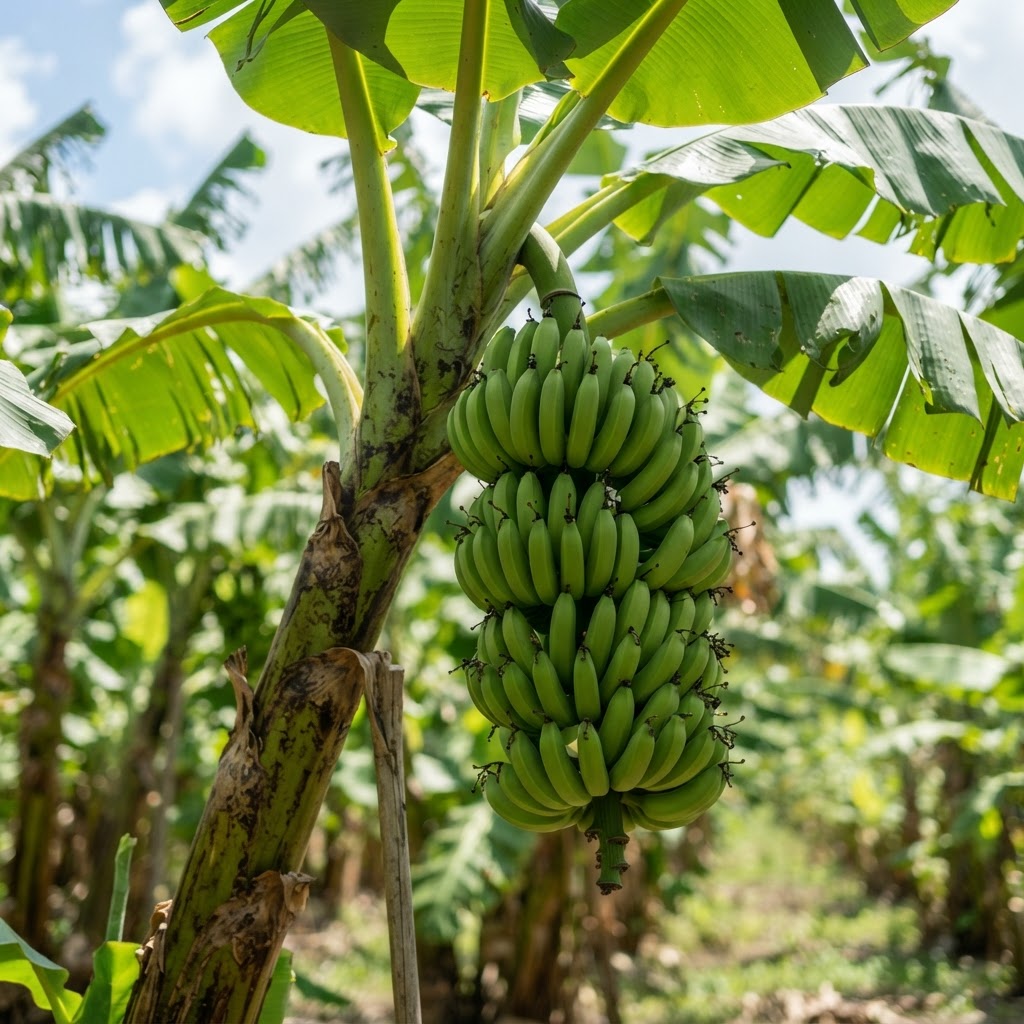
Gran Nain
A tall, vigorous Cavendish-type grown commercially worldwide. Gran Nain produces large, uniform bunches of long, sweet bananas and thrives in Florida's heat and humidity when given room and wind protection.
The "Ice Cream" banana
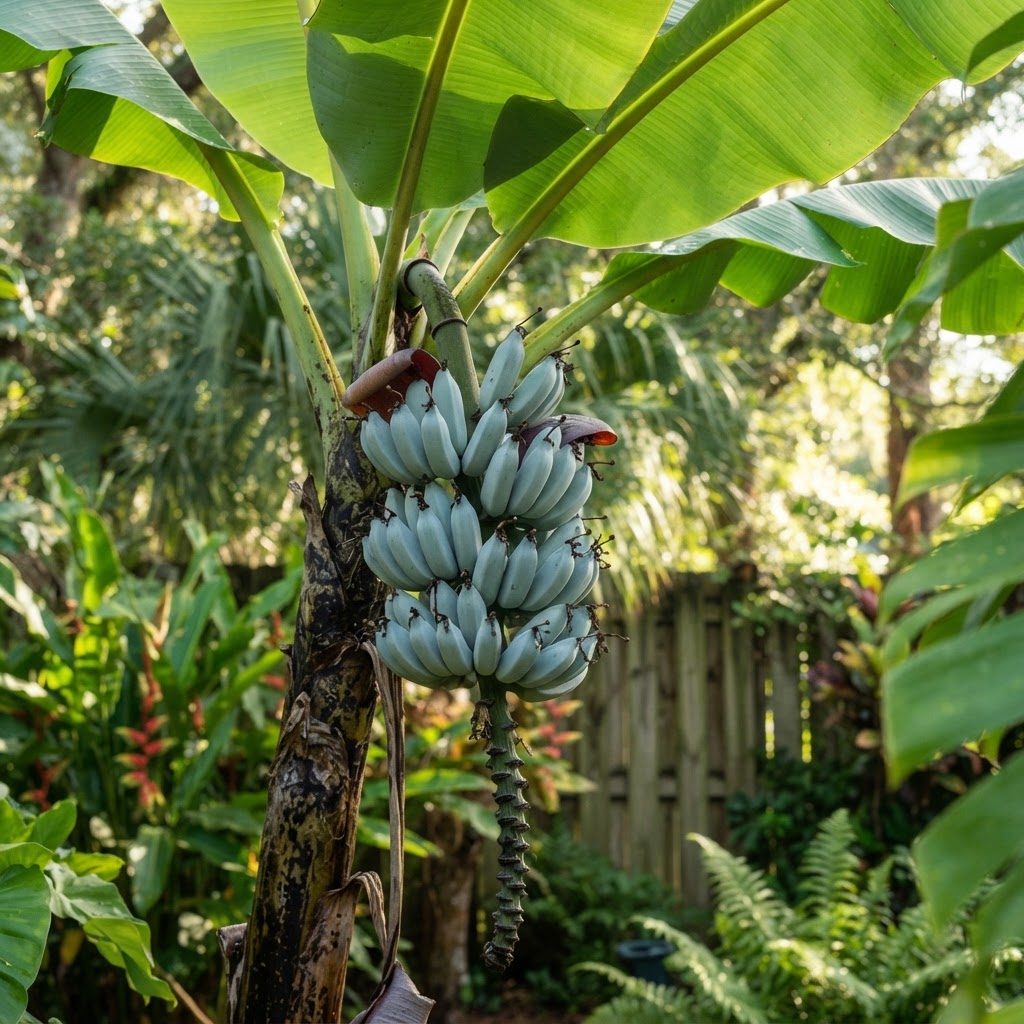
Blue Java
Famous for its silvery-blue unripe fruit and creamy, vanilla-custard flavor that earned it the nickname "Ice Cream banana." Cold-hardy for a banana and a favorite of Florida collectors and home growers.
Growing Guide
Growing in Southwest Florida
Bananas are forgiving and fast, but a little attention to water, feeding, and pruning turns a leafy clump into a reliable fruit factory.
Planting
Plant in spring after the last cold snap. Space 8–15 feet apart depending on variety, in a spot protected from strong wind. Bananas love rich, well-drained soil amended with compost and mulch.
Sun & Exposure
Full sun to light shade. Bananas want at least 6 hours of direct sun for good fruiting, but in southwest Florida's intense summer a little afternoon shade can keep leaves from scorching.
Watering
Bananas are thirsty and hungry. Keep the soil consistently moist — never soggy — and feed heavily. A thick mulch layer holds moisture and feeds the shallow roots as it breaks down.
Temperature
Tropical by nature. Bananas grow year-round in southwest Florida but slow in winter. Frost can damage leaves and fruit; a hard freeze may kill the top, but the corm usually resprouts in spring.
Maintenance
After a stem fruits it dies — cut it to the ground to feed the next pup. Keep only 3–4 strong stems per clump (one fruiting, one half-grown, one small) and remove the rest for the best crop.
Harvest
Cut the whole bunch when the first bananas start to yellow, or harvest individual hands as they fill out. Ripen indoors at room temperature. A single bunch can feed the whole family.
A Note on Climate
Tropical Fruit, Florida Easy
Bananas are one of the most rewarding plants you can grow in southwest Florida. They grow fast, fruit generously, and turn any sunny corner into a slice of the tropics. Give them sun, water, food, and mulch — then stand back. With the right variety for your space, you can be picking your own bananas within a year or two.
Back to Featured Items